Overview
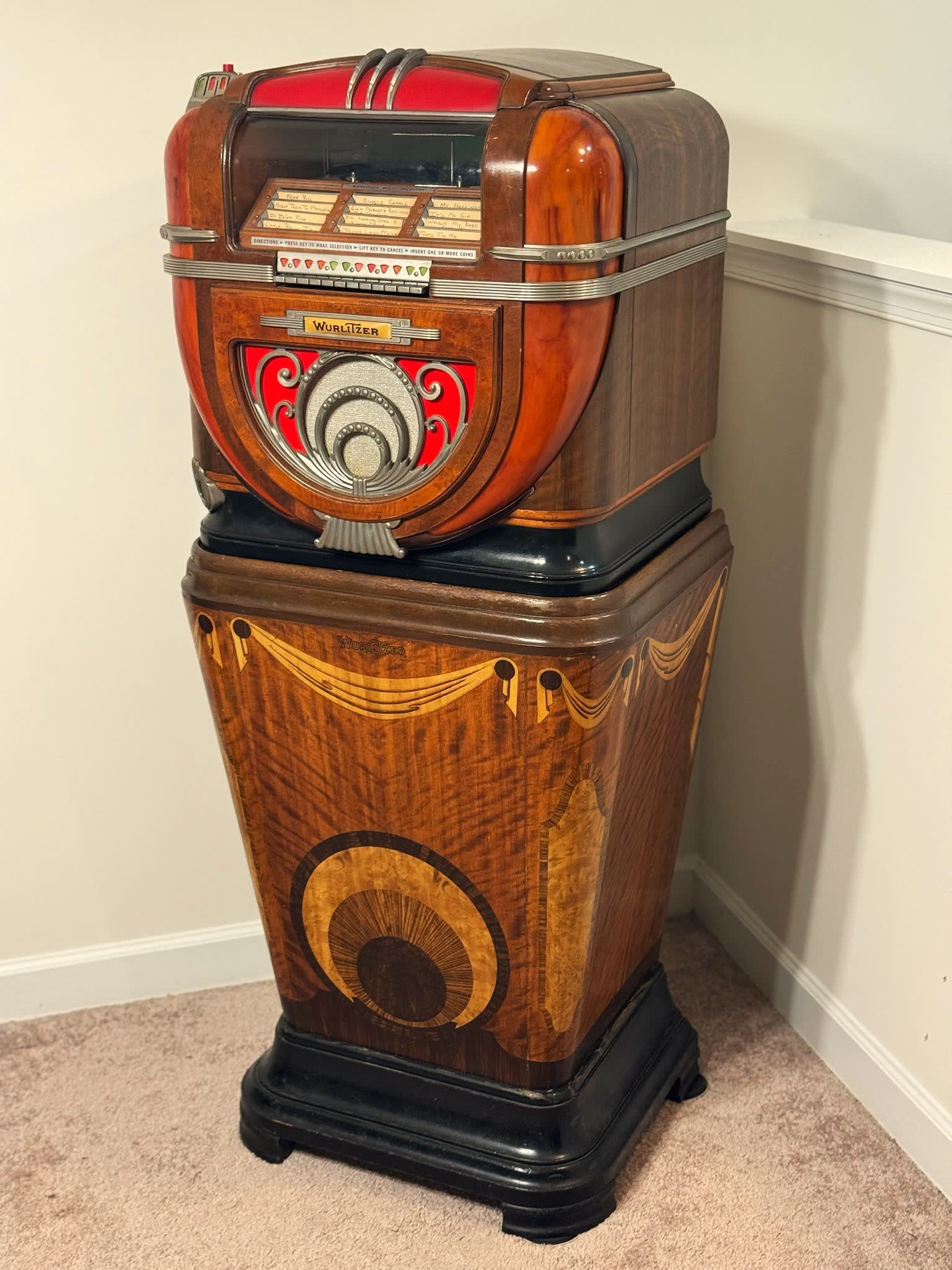
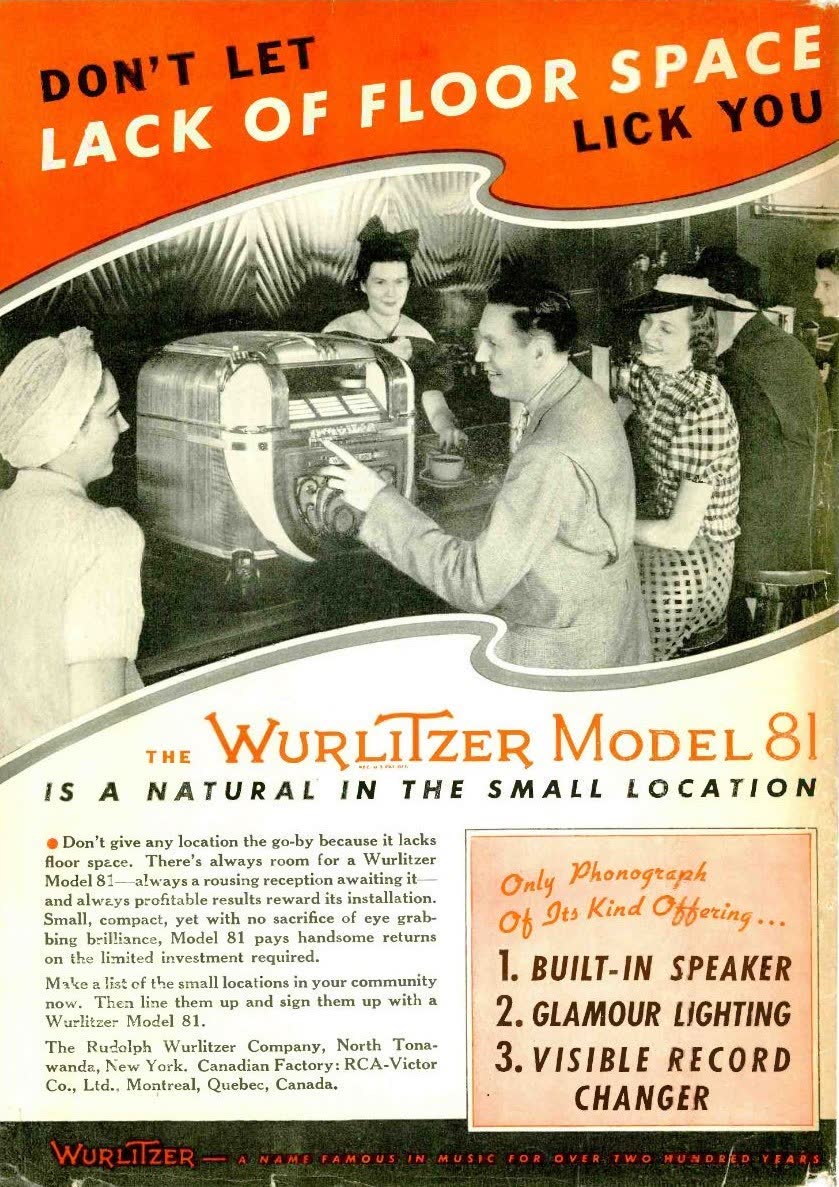
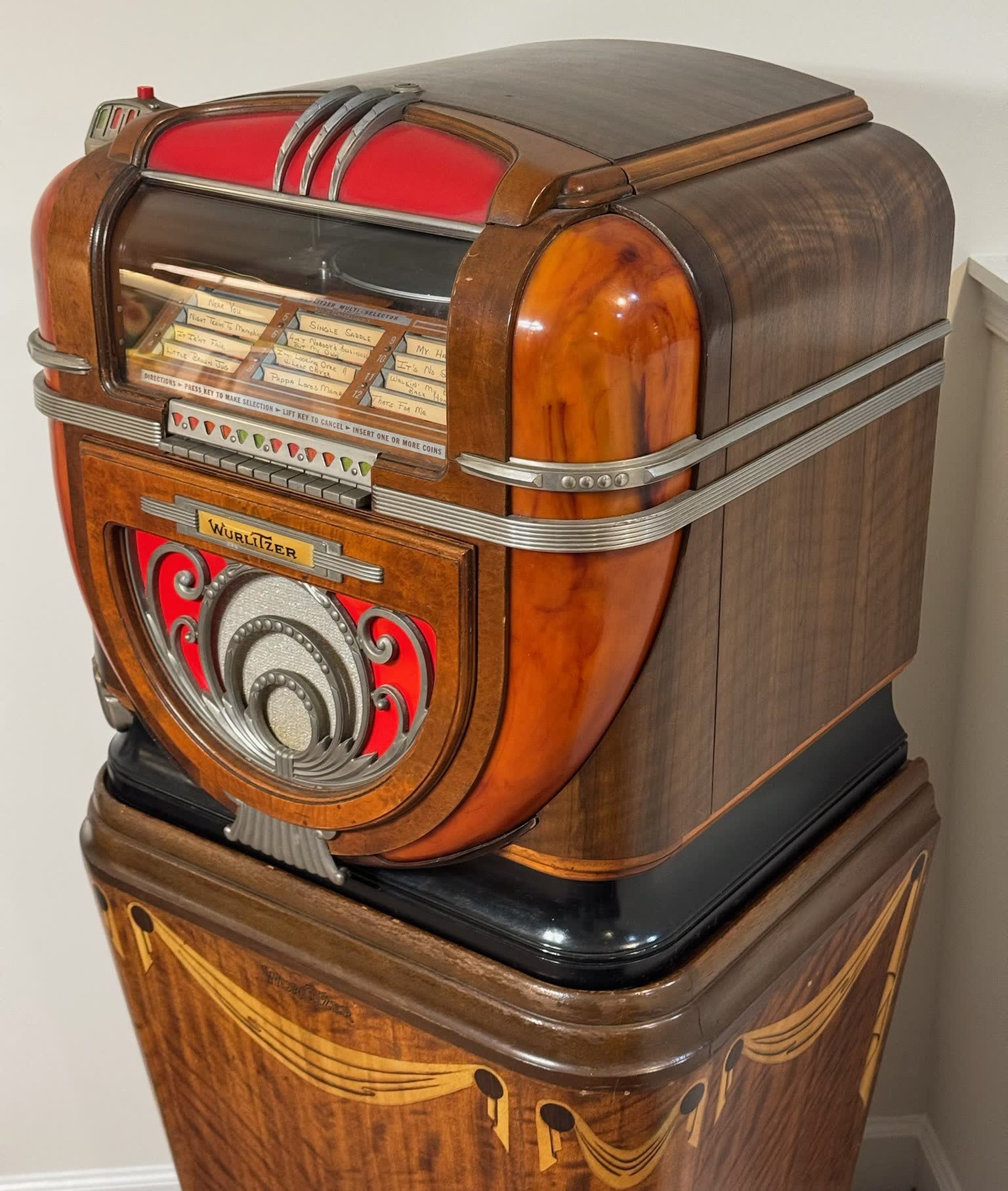
This is a Wurlitzer Model 81 “Countertop” jukebox sitting on an original Wurlitzer 810 stand. Wurlitzer’s countertop jukeboxes were designed to fill a niche in the music entertainment market. In bars, shops, and restaurants where floor space could not accommodate a full size jukebox, a much smaller machine could set on a table or bar and generate income while providing patrons with music and eye candy. The Model 81 can hold twelve 78 RPM records and for credits it accepts nickels, dimes, and quarters.
The 810 “Mae West” stand was an optional factory stand designed specifically for the countertop models. The stand transformed the compact machine into a full-height floor-standing jukebox while still having a smaller footprint than other full size machines. The Model 81 and the stand were built in 1941 and stopped being produced in 1942 due to material restrictions from the US’s involvement in WWII. The niche use case and small production period means very few of these jukeboxes were produced and sold, with even fewer remaining machines left today. The 810 stand is even rarer due to the same reasons and even more niche use cases. Only a handful of original stands are known to still exist.
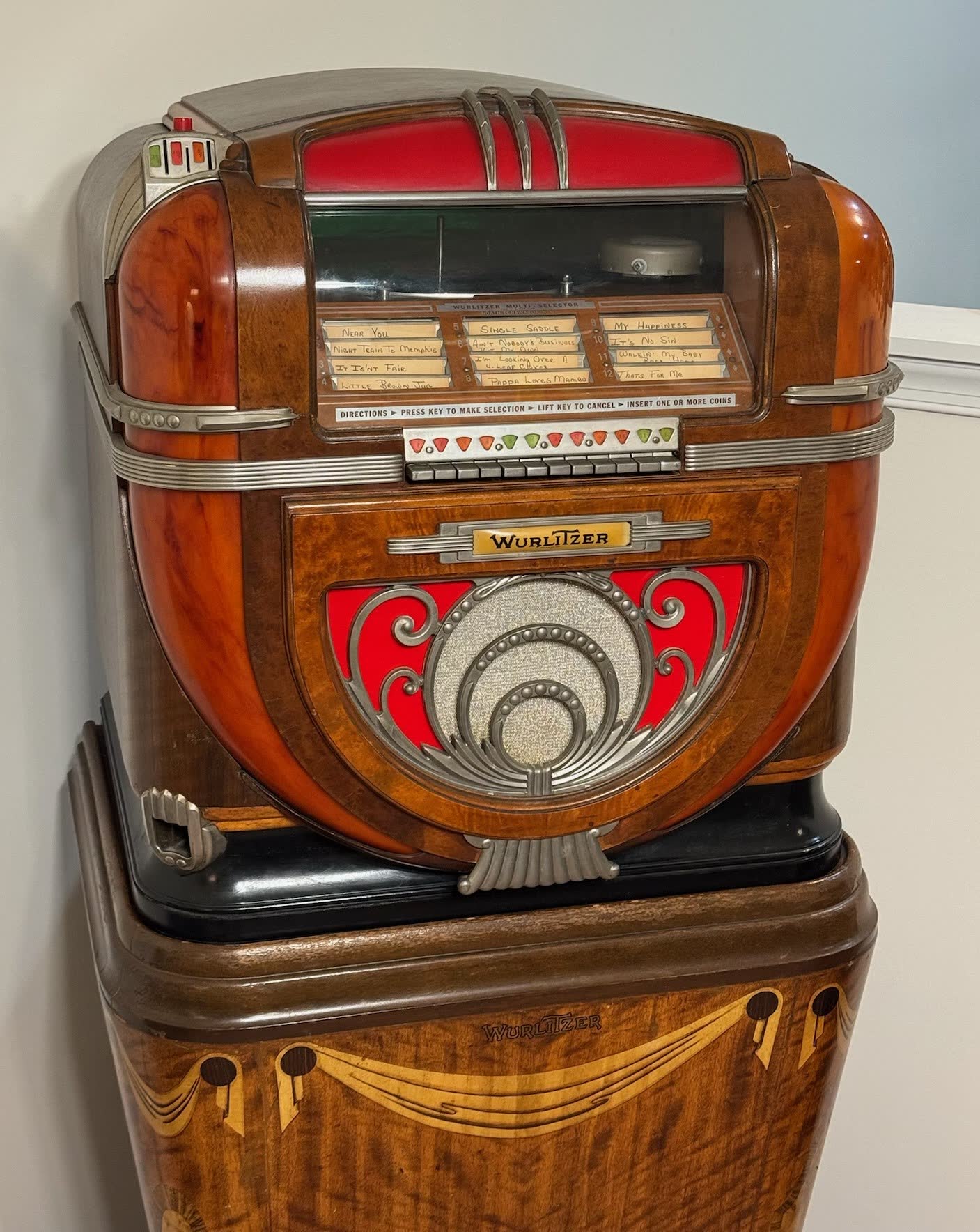
The Model 81 is one of the most striking examples of Wurlitzer’s late-1930s and early-1940s eye-catching design philosophy. It features a stunning Art Deco design with gorgeous, rich holographic veneer, a curved silhouette, beautiful illuminated marbled Catalin plastics, and chrome trim accents. It was designed by the legendary golden age jukebox artisan Paul Fuller, who was responsible for the majority of Wurlitzer’s most recognizable machines. The Model 81 is considered one of the most elegant expressions of his style. It represents a unique, short moment in American history where product designs focused simultaneously on sophisticated mechanical assemblies as well as glamorous artistic expression.
As with other jukeboxes of the era, it lights up beautifully when turned on. Wurlitzer referred to it at the time as “glamour lighting”. It was advertised as being designed to create an eye-catching visual in any space. The lighting was intended not only to illuminate the machine but also to accentuate its unique materials, contours, and decorative details.
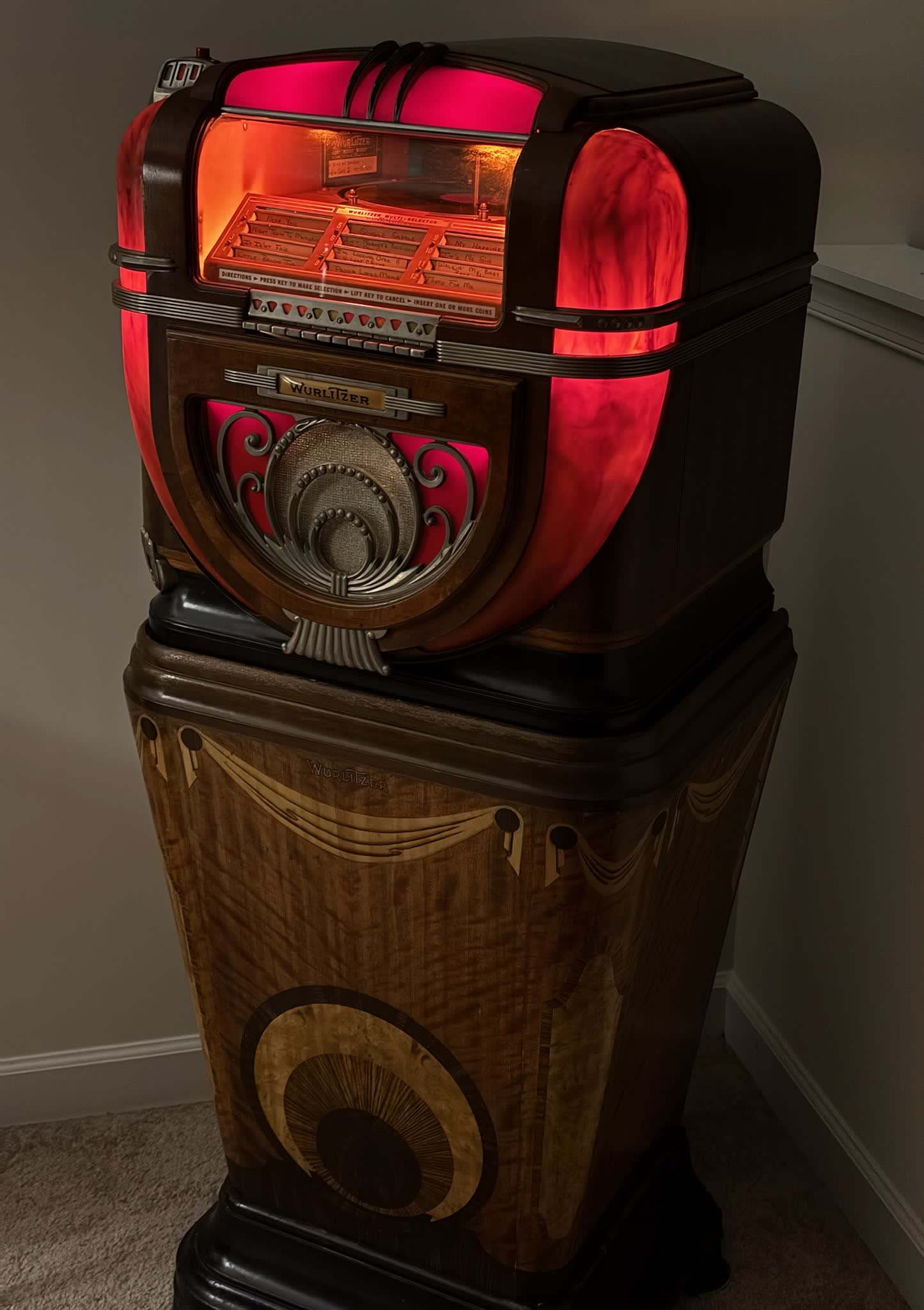
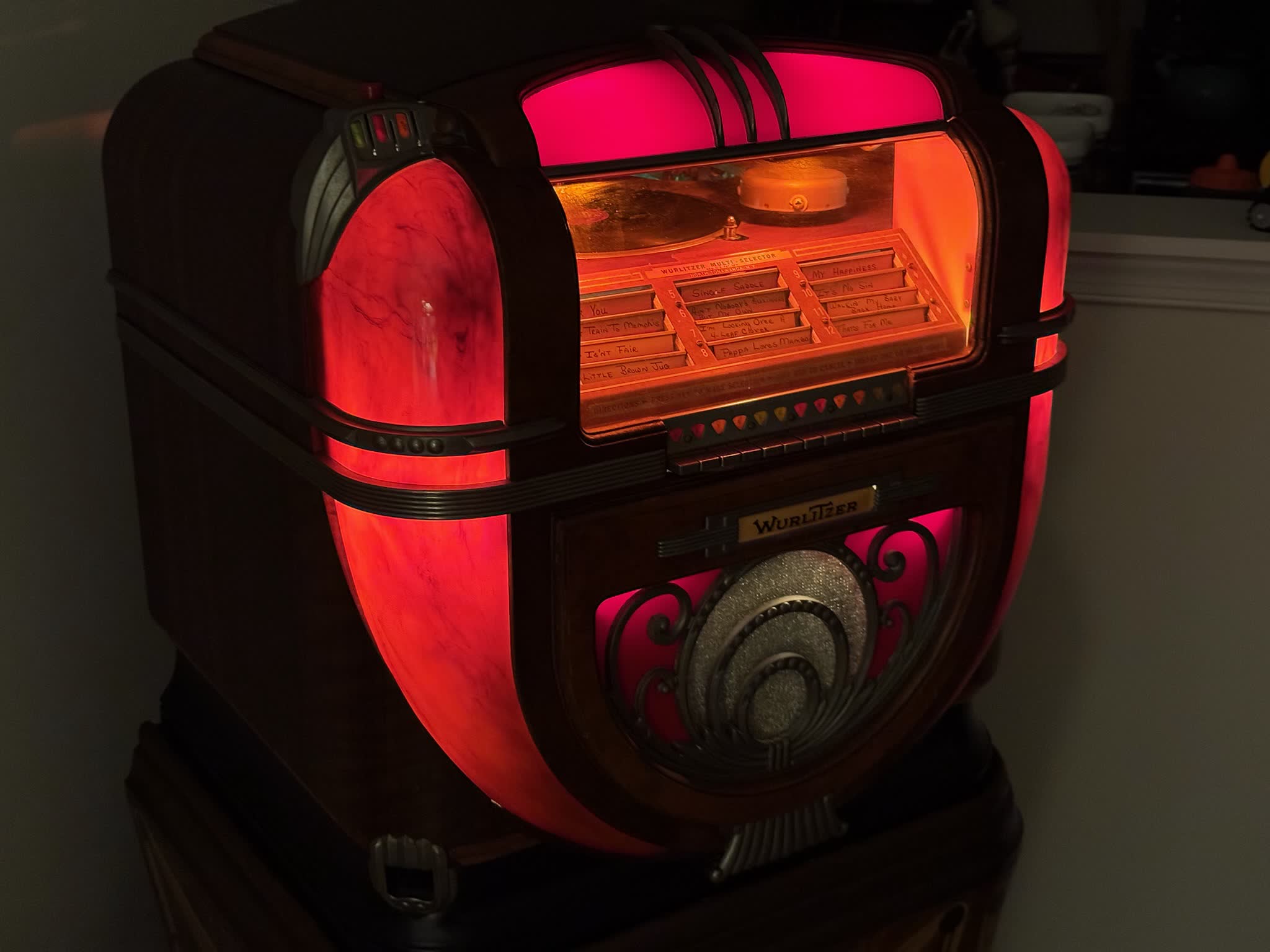
It has several different color bulbs and various diffusers that add varying colors to the plastics, the player, and the selection numbers. This gives the rounded marble plastics a lovely warm glow, letting it wrap the illuminated record tray centerpiece and reflect off of the chrome trim under the multicolored backlit selection numbers. These come together to create a carefully wonderful interplay of warm colors, reflection, and translucent illumination.
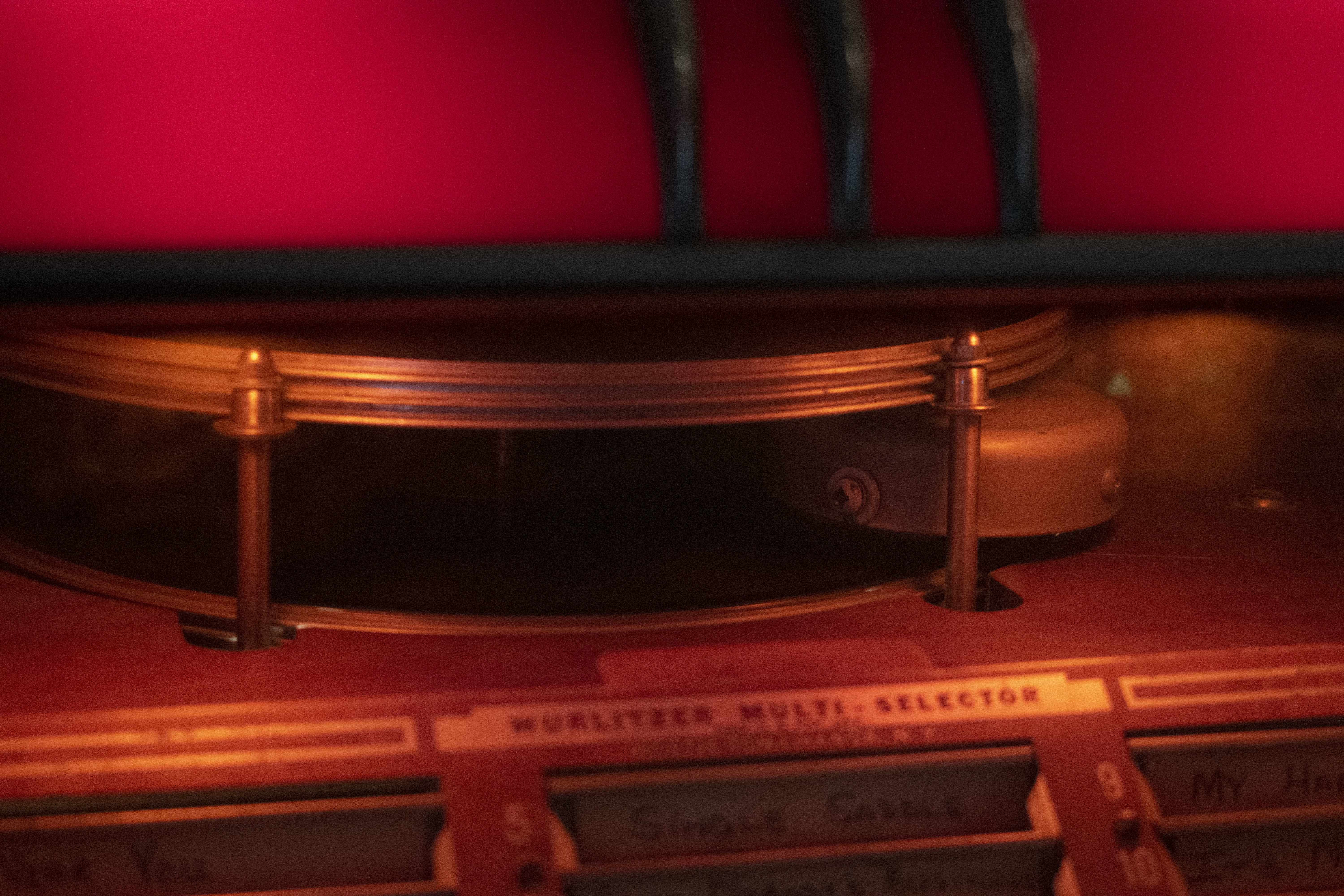
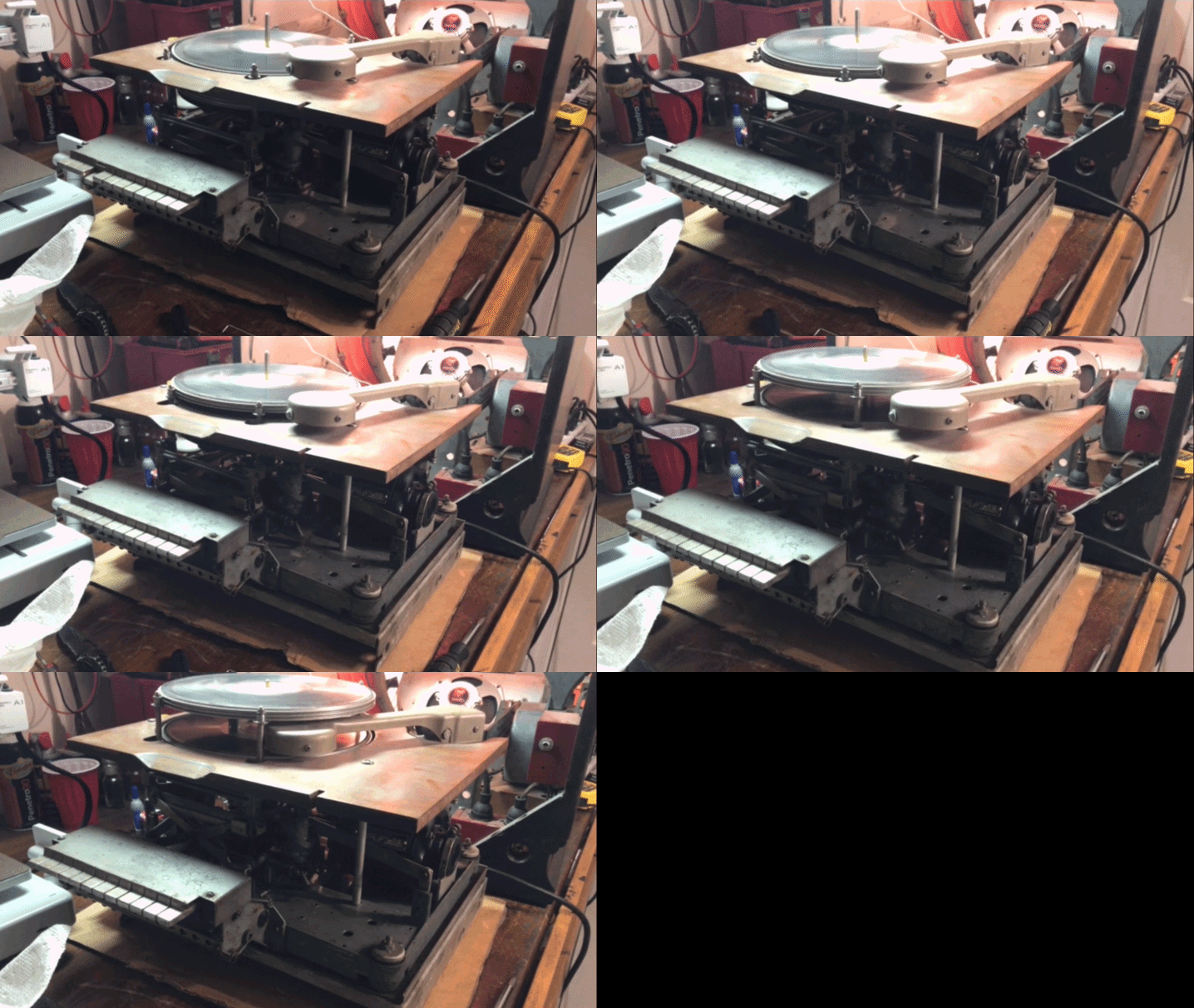
It has a unique way of playing records in such a compact way. Unlike later jukeboxes that relied on large electromechanical assemblies, the Model 81 uses a surprisingly compact entirely mechanical record-changing and selection system. All the records are resting on top of one another in a neat stack. To play a record lower in the stack, the records above it are lifted out of the way and the tone arm swings underneath them to rest on the chosen record. Additional selections can be made while a song is already playing, allowing songs to be queued up for play. A GIF of the mechanism functioning is here at the bottom of the mechanism repair section.
This particular machine’s serial number is 720508. The plaque matches the engraved serial numbers elsewhere on the box.
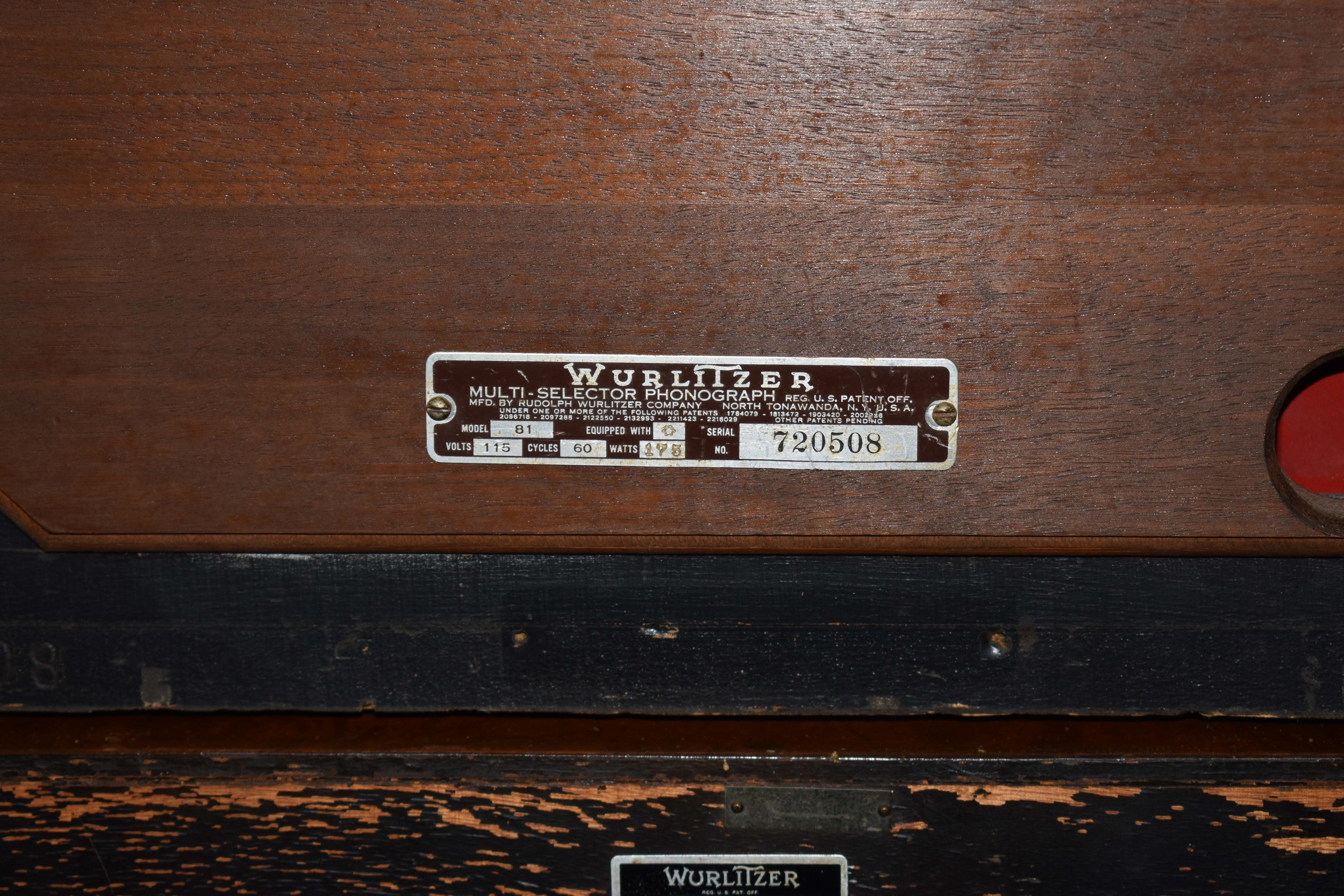
My grandmother owned this specific machine for over fifty years. They took good care of it, kept it in a climate-controlled environment, and it hasn’t seen direct sunlight in at least forty years. However, it has not played music in just as long sadly and was mostly used for a static decoration. Due to this, it still needed quite a bit of work. I took ownership of this machine after their passing and decided to restore it to as close as new condition as I could and get it playing songs again.

History
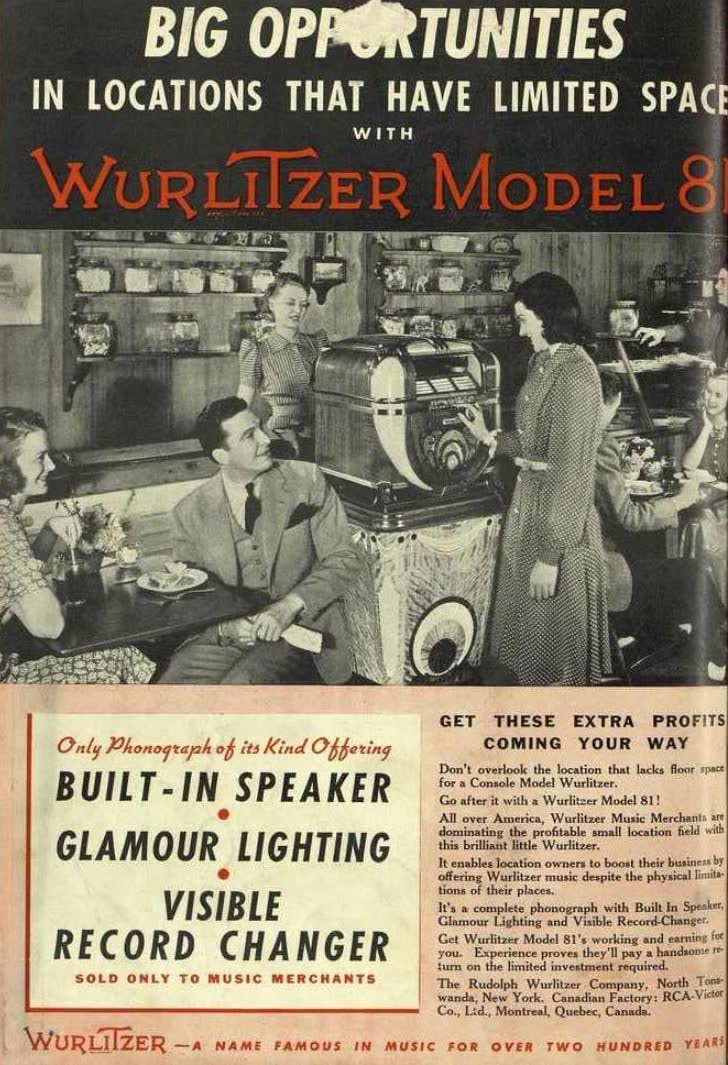
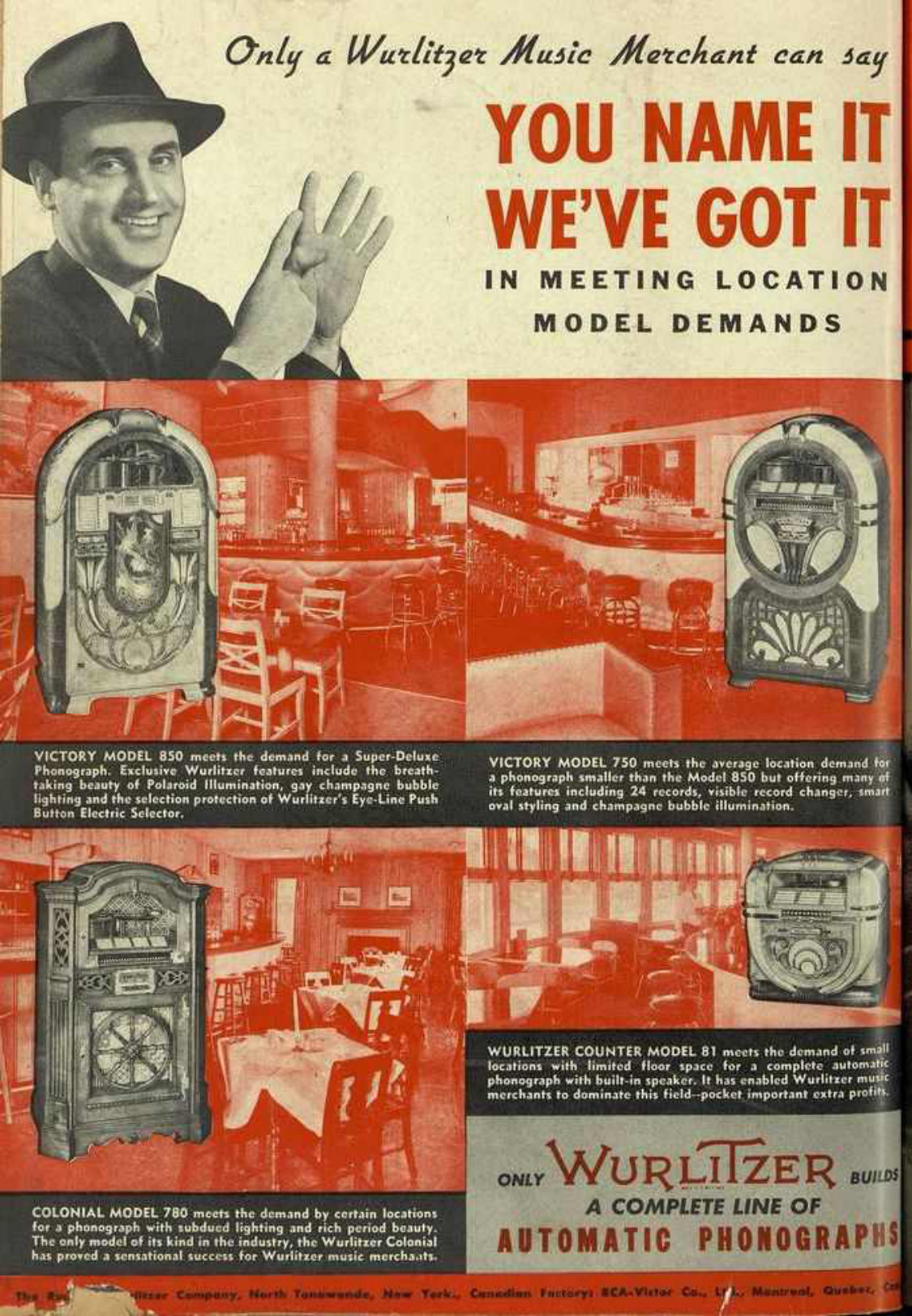
Starting in 1937, The Rudolph Wurlitzer Company in North Tonawanda began producing a special line of countertop jukeboxes. These jukeboxes were targeted at establishments that didn’t have room for or couldn’t afford a full size 24-record, 300+ pound jukebox. Countertop models were designed to sit at the end of a bar or on a sturdy shelf while taking up minimal space, but still providing music and income for the establishment. Multiple models with varying styles were produced: 41, 51, 61, 71 and 81. These jukeboxes varied in size and most featured an Art Deco inspired design with lovely decorative plastics surrounded by chrome accents. They all hold and play twelve 78-rpm records.
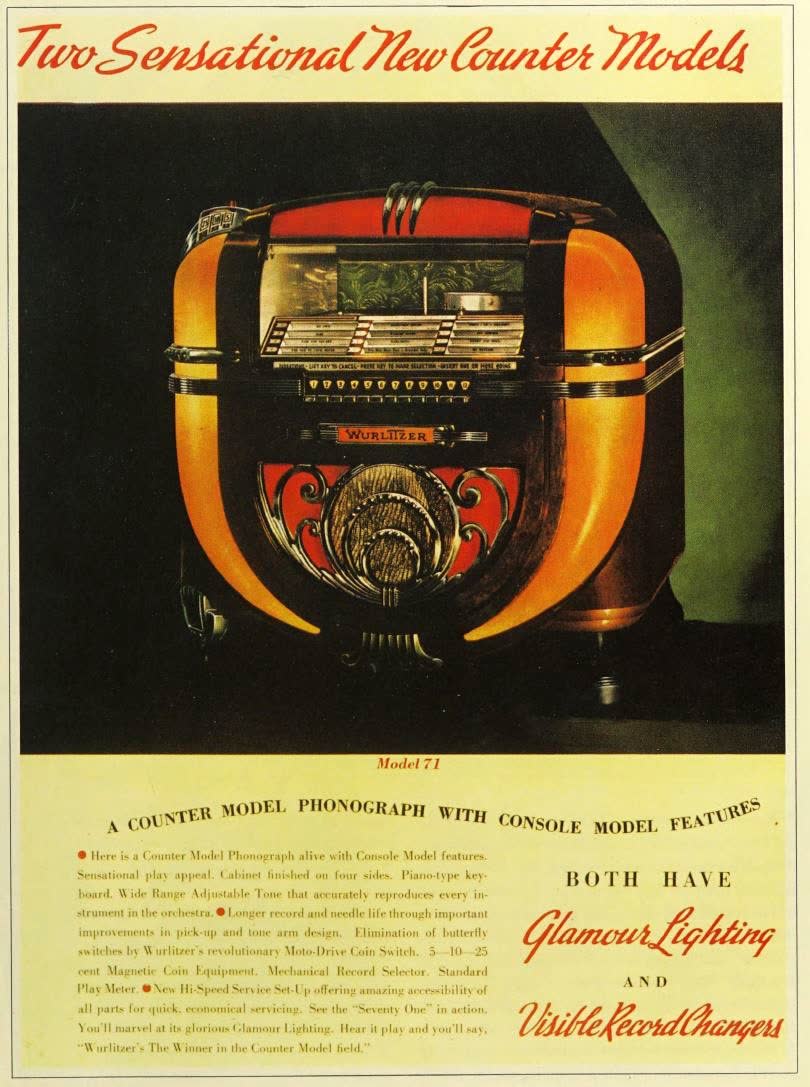
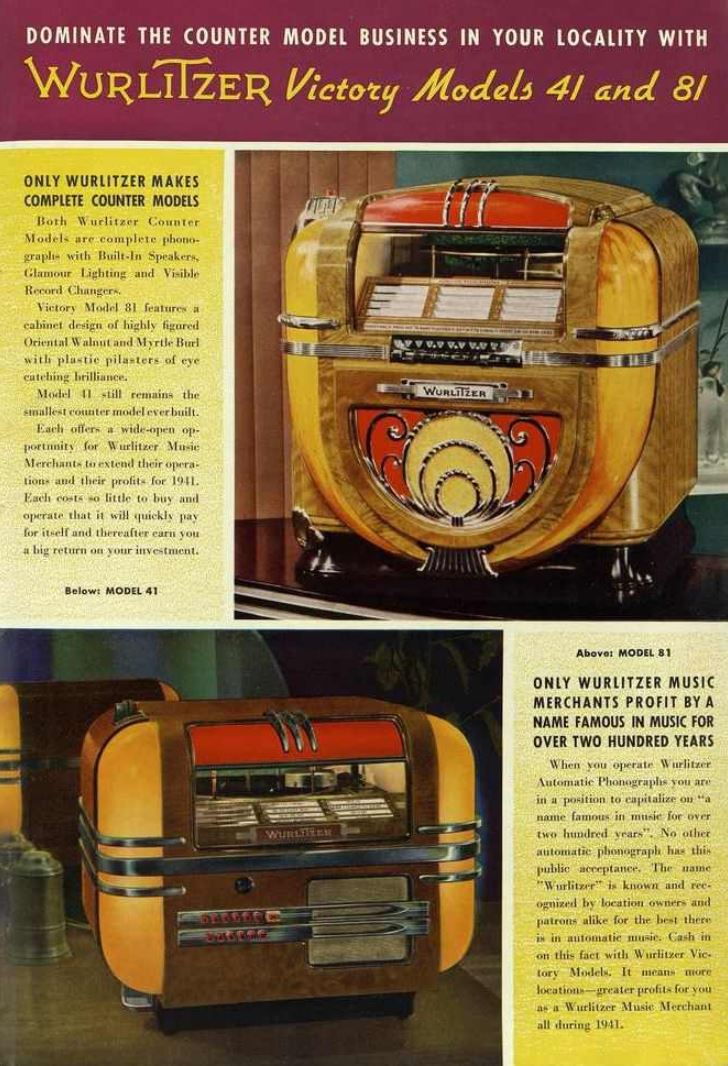
The Model 81 is the final countertop model to be introduced. It started production in 1941 with all countertop models (including the 81) ceasing production in 1942. I couldn’t find a source for the price when new, but it could be bought used in 1948 for $175, quite a lot of money for a six year old used jukebox. It is largely the same as the model 71 shown in the advertisement above except for some cosmetic changes. The biggest different is the use of beautiful marbled Catalin plastics on the front as opposed to the 71’s yellow plastic. And a “zebra” holographic veneer was used on the outsider of the 81.
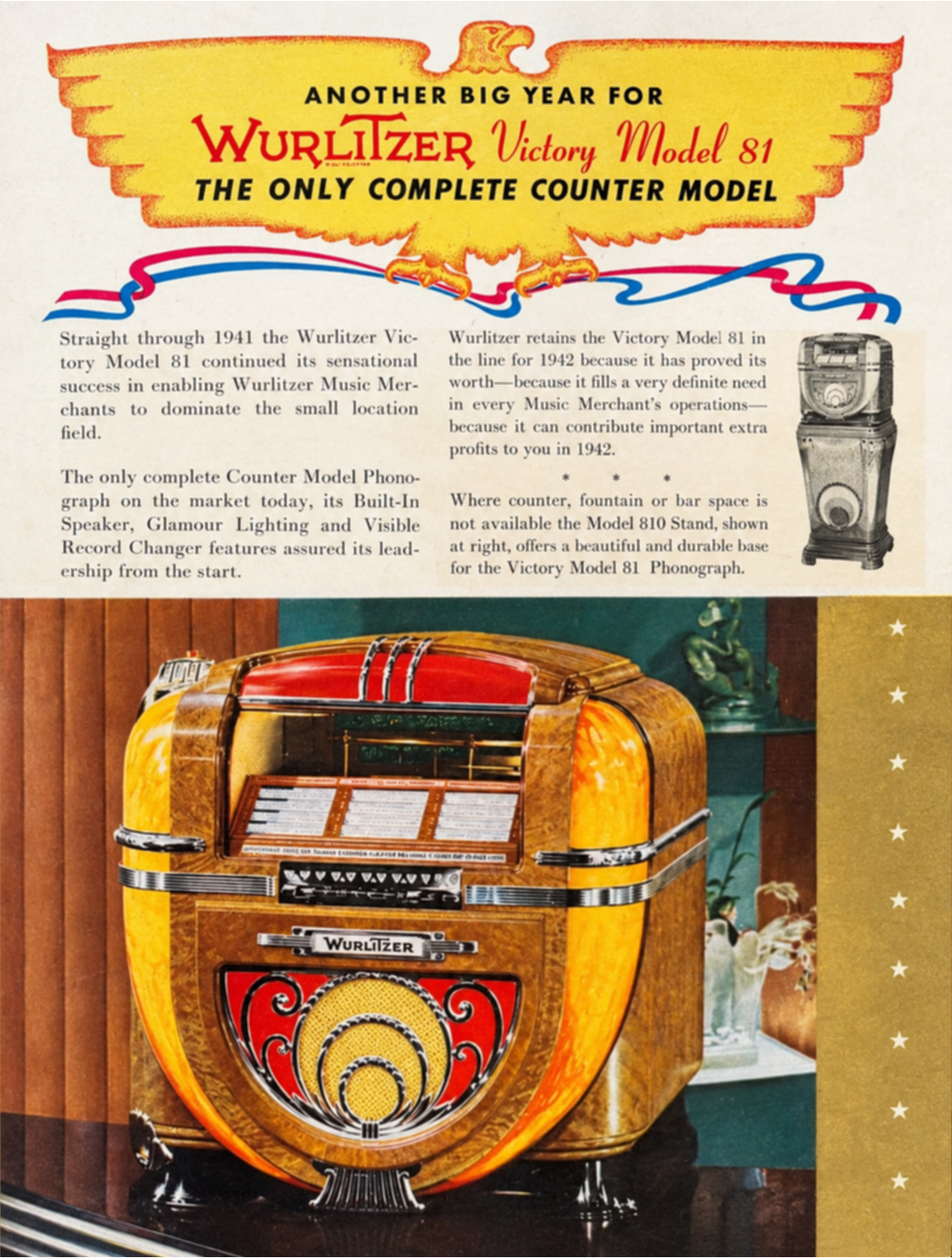
When the US became involved in WWII, material restrictions started being imposed on businesses. Due to this, production ceased in 1942 after only selling ~1000 Model 81 units. Programs to trade in older jukeboxes to help aid in the war for materials, the niche use case of the countertop models, and the limited production run means the Model 81 is an incredibly rare jukebox.
Mae West Stand
This 81 does still sit on its original pedestal and incredibly rare Model 810 “Mae West” stand. It earned this name from Mae West, a singer, actress, and popular sex symbol from the 1920s and 1930s. The stand was inspired by the shape and design of her popular trumpet dresses.
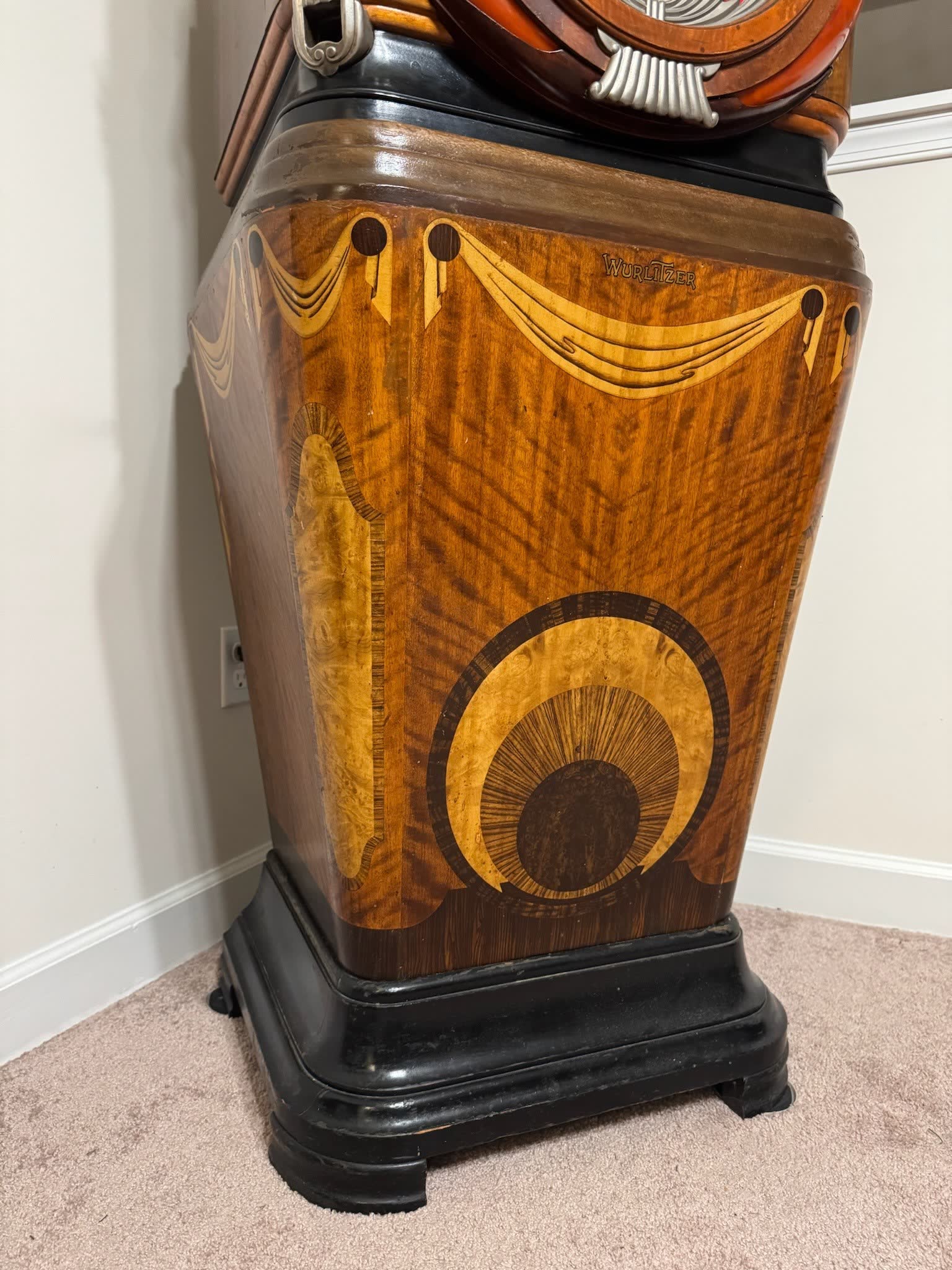
The stand, like the jukebox was designed by Paul Fuller.
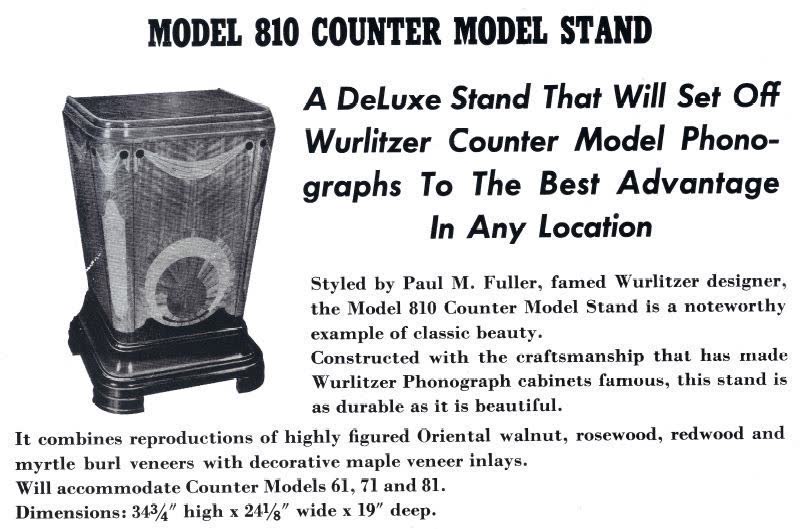
This stand was released at the same time as the Wurliter 81 and was advertised for use where countertop space was unavailable and floor space could not accommodate a full size 24-record jukebox. This niche use case combined with the already tiny Model 81 production run as well economic and material struggles of the US entering WWII meant very few of these stands were produced and sold. Production of the stand was ended at the same time the countertop boxes ended production. Only a handful of original stands are known to still exist today, with a number of reproduction stands made in the 90s existing as well.
Given its age, the stand is in great shape. It has some patina, some wear and tear, and one brace needed to be re-glued.
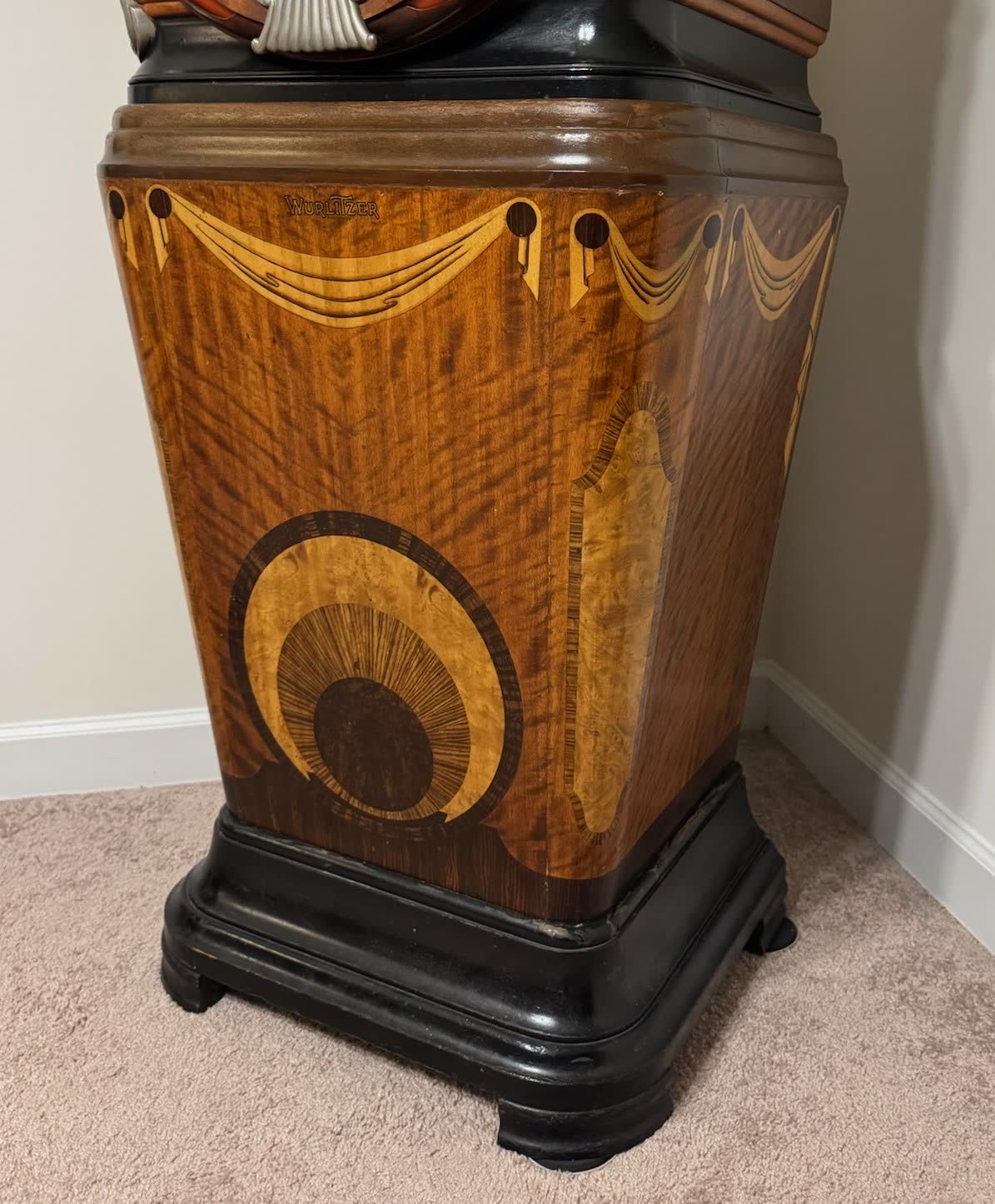
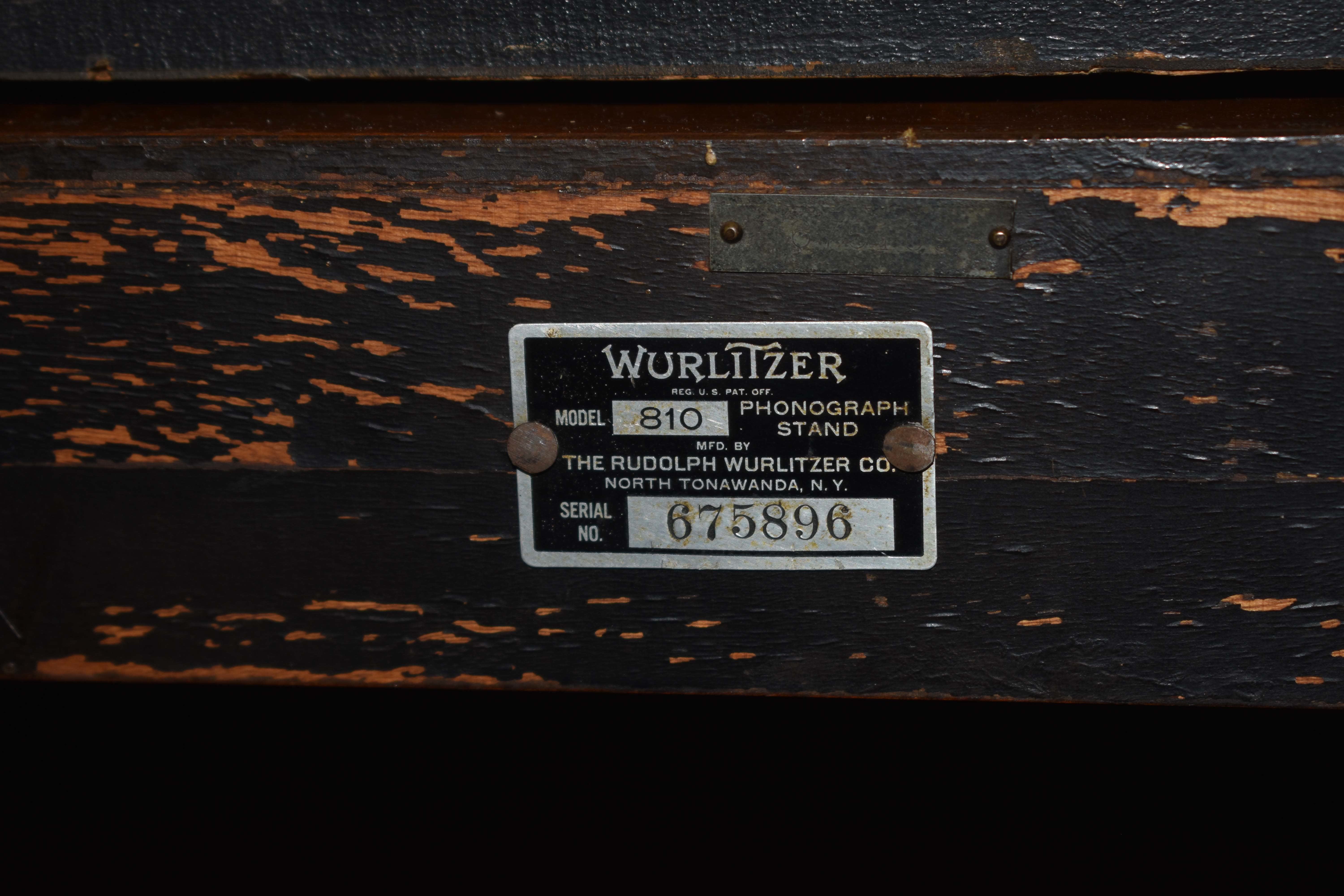
This stand is serial number 675896.
Repair
Stand
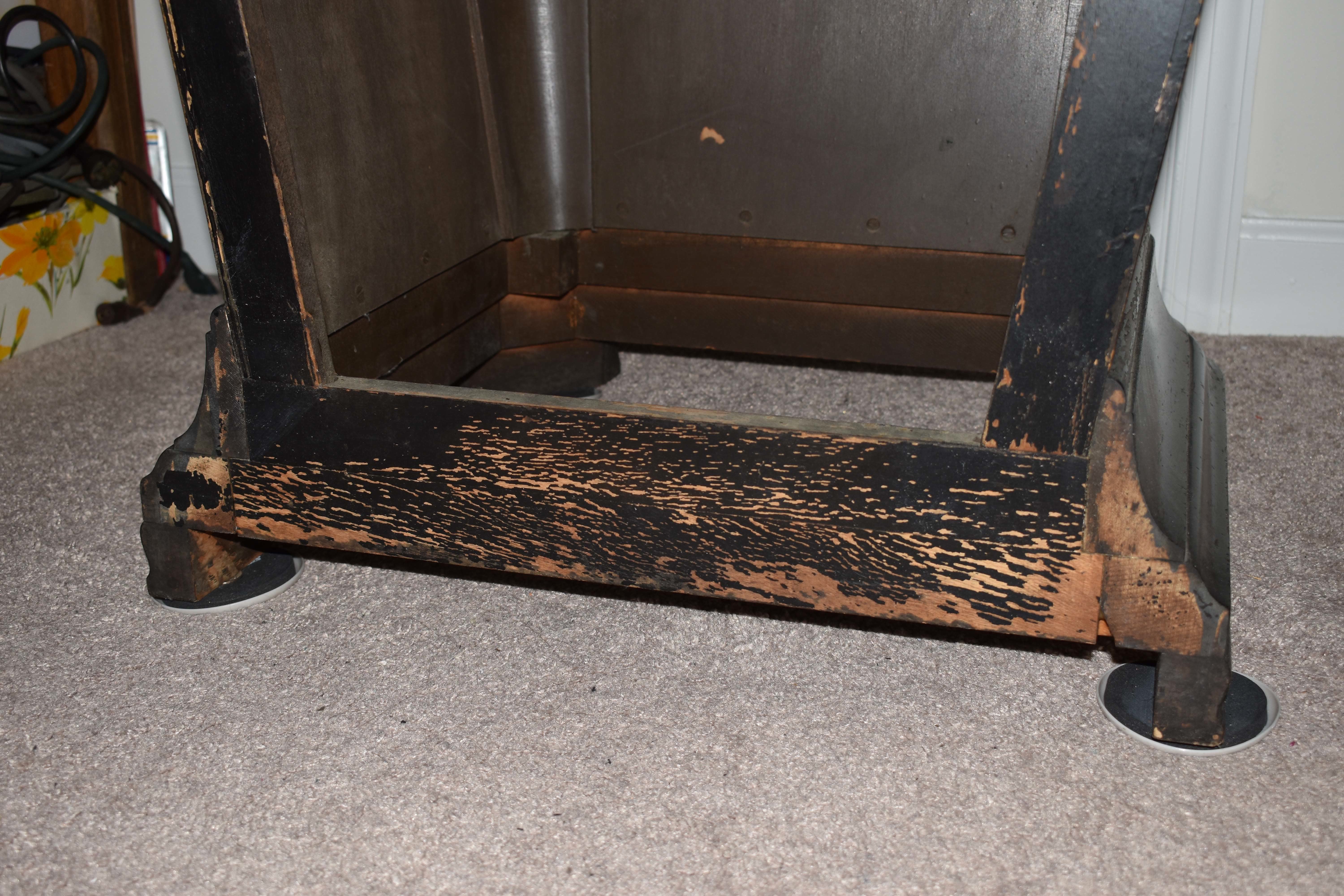
The back side of the stand has lost some paint but is in overall great cosmetic shape fo0r it’s age. There were a few other issues though. Two of the lower horizontal support pieces and an internal support piece had come completely loose. And several vertical facing joints at the top were starting to separate. This was probably a result of the stand being moved and not having the full weight of the jukebox on it for the first time in over forty years. The pieces were fixed in place with wood glue, clamped down and left to sit for several days.
Amplifier
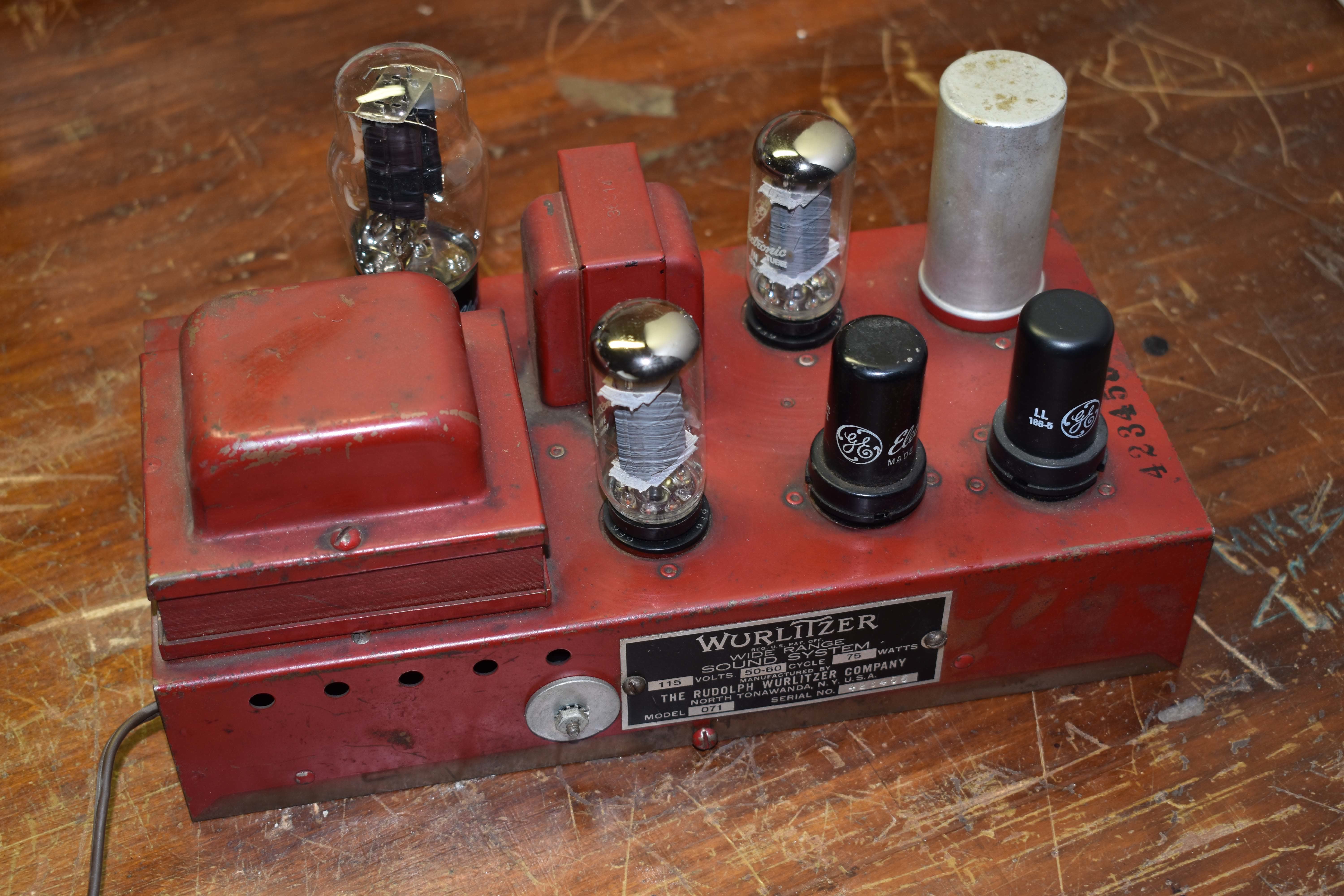
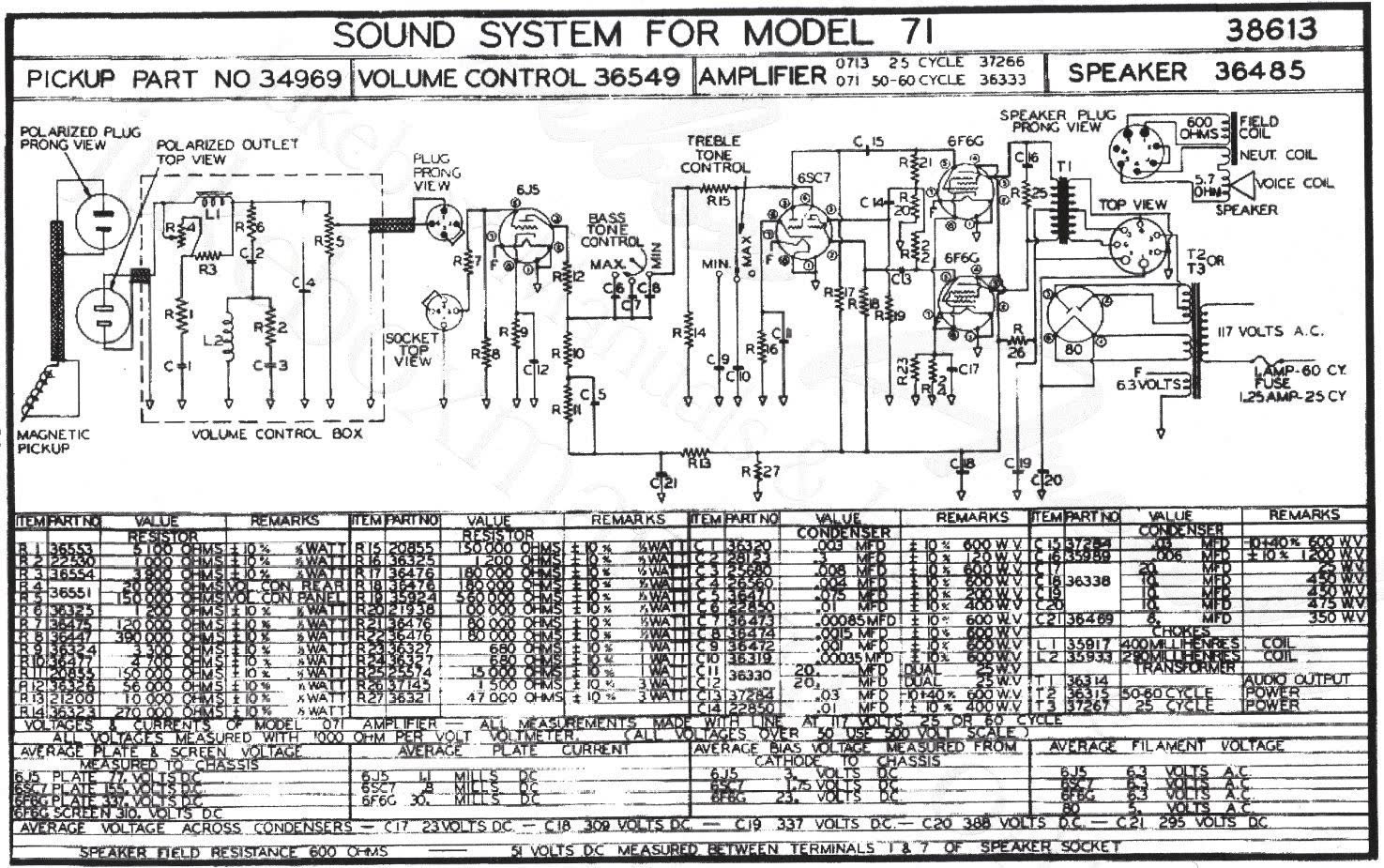
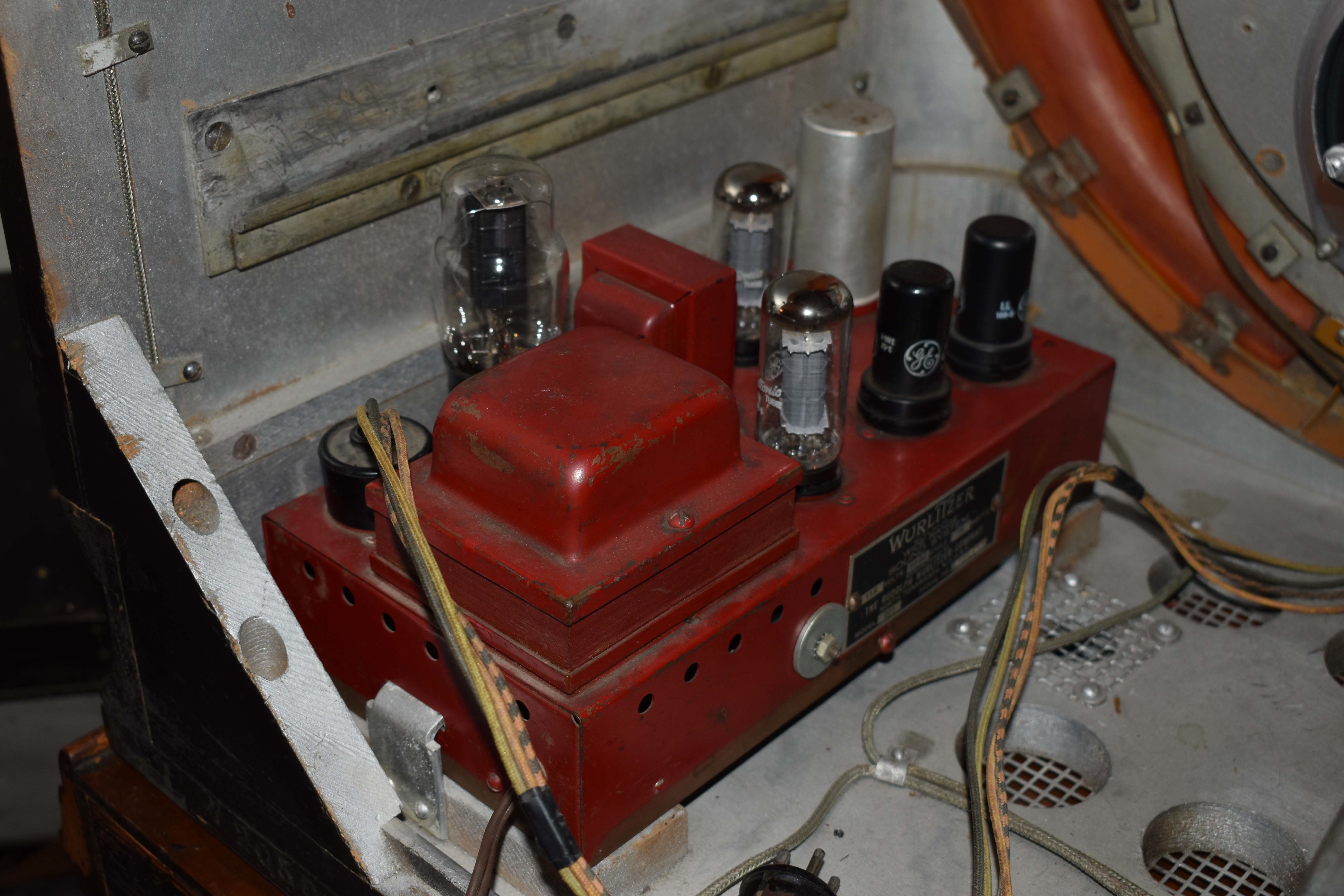
This machine uses the Wurlitzer model 071 amplifier.
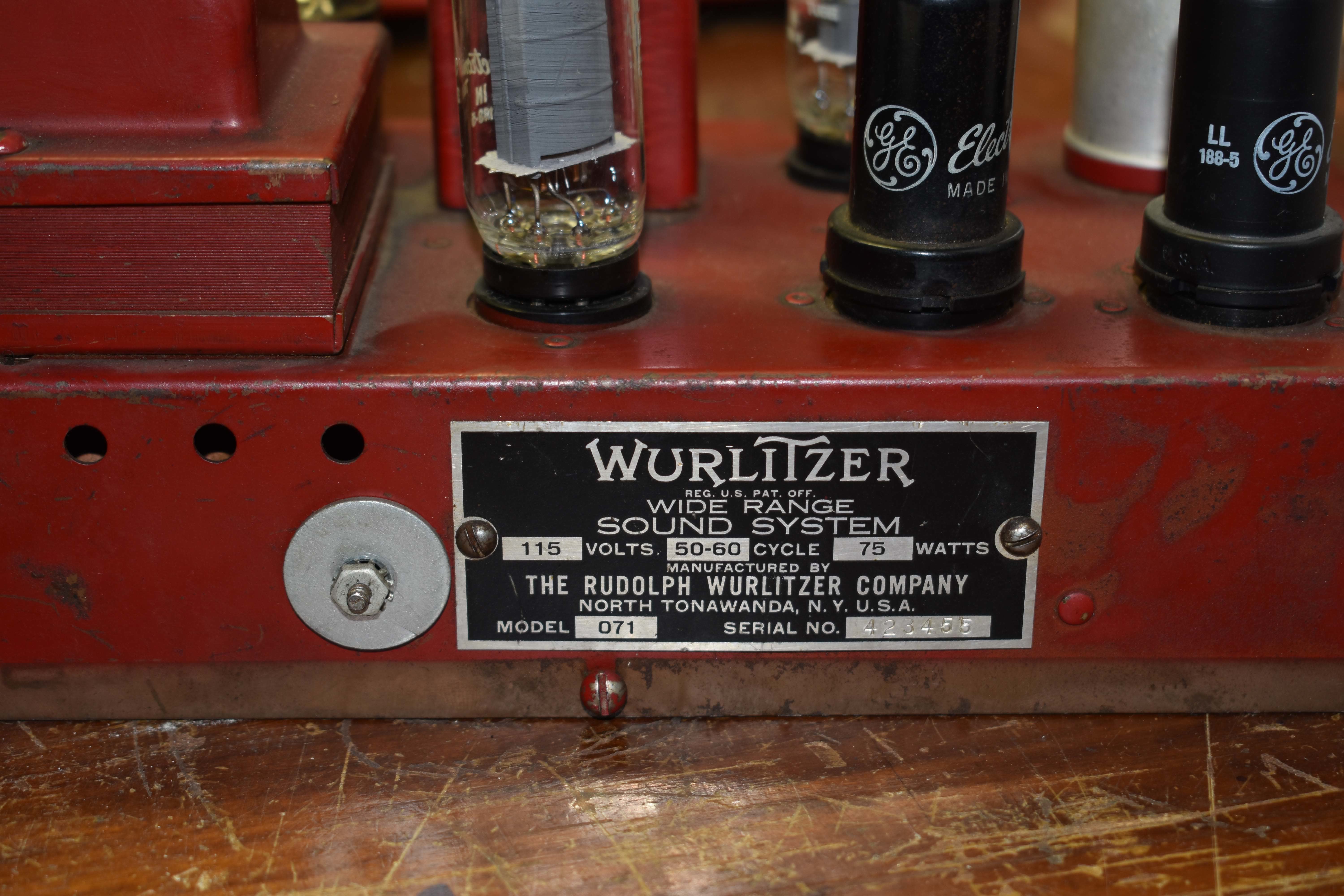
The 60 cycle American model takes 115 volts AC as input. It uses one 80, one 6SC7, two 6F6G, and one 6J5 tubes.
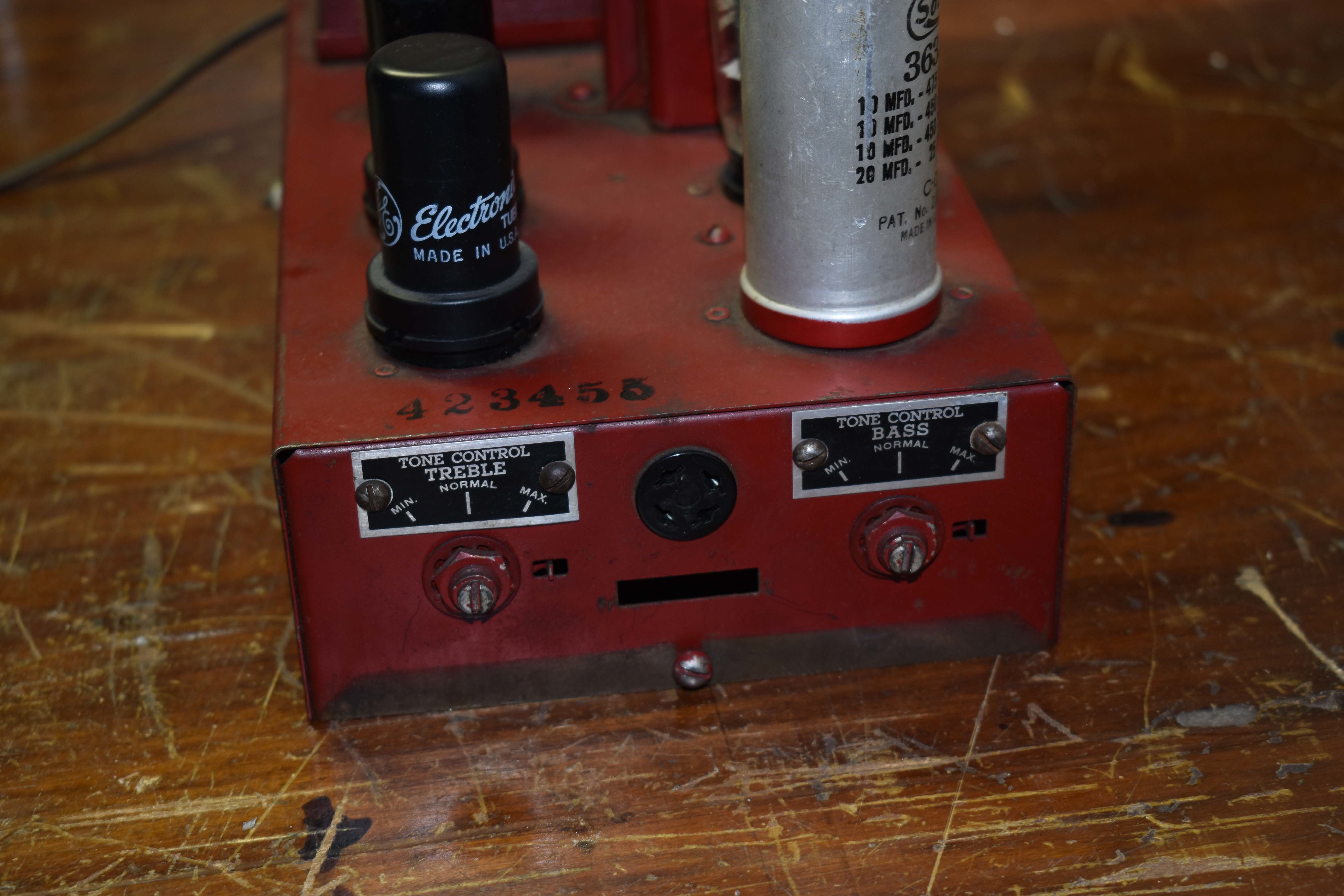
It has settings on the front facing side of the amplifier for bass and treble adjustments. The volume control is in a separate box in the cabinet.
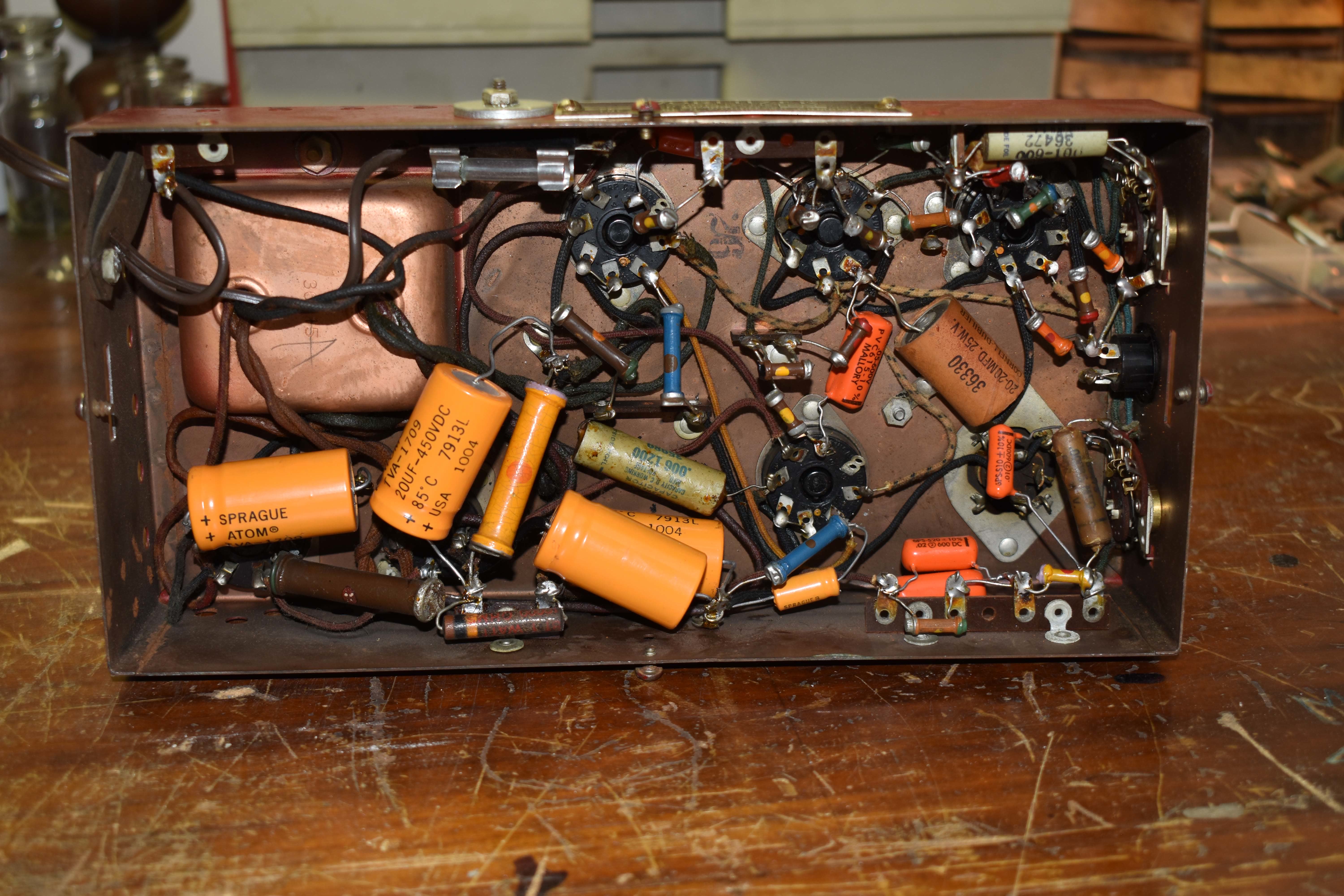
Underneath, it needed several new caps and resistors. I used old stuff I had laying around that still tested well and a few parts from Ebay. There were also a few parts that had solder joints broken, probably due to being grabbed or handled via the uncovered bottom of the machine. The best schematic copy I could find to aid in the recapping has been scanned and shown below.
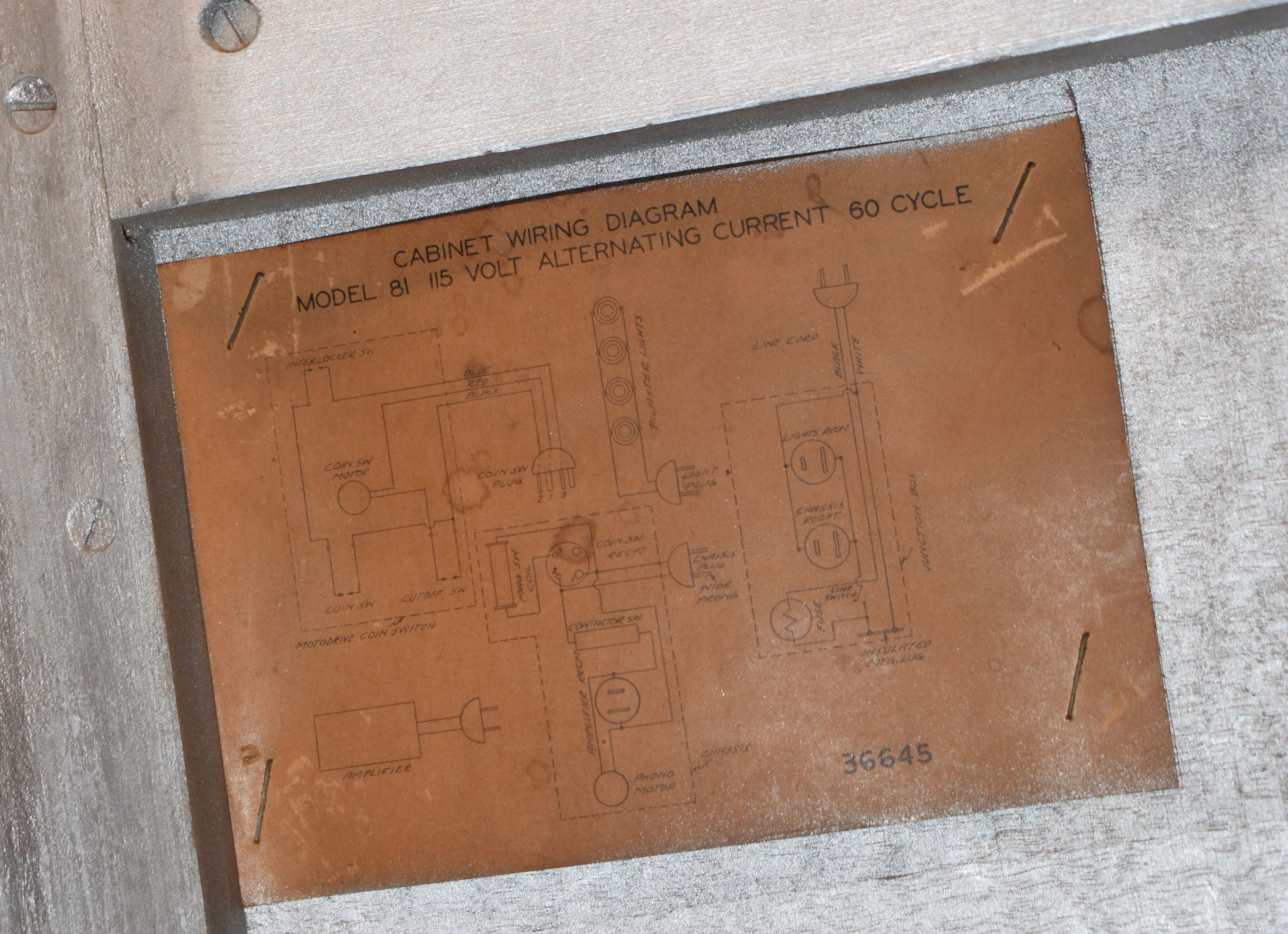
And here’s the cabinet schematic that was still in the top lid of this machine.
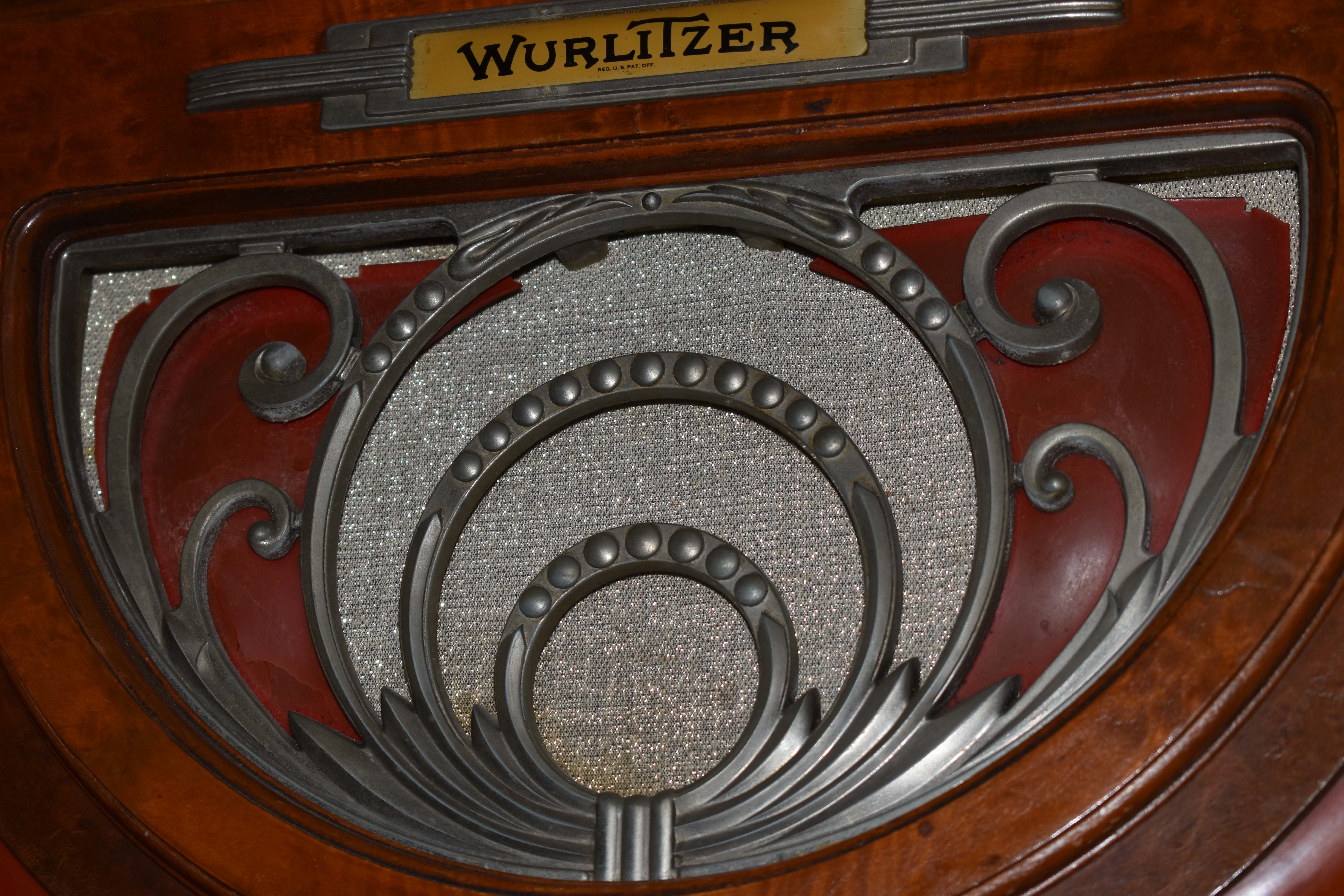
Front Grill
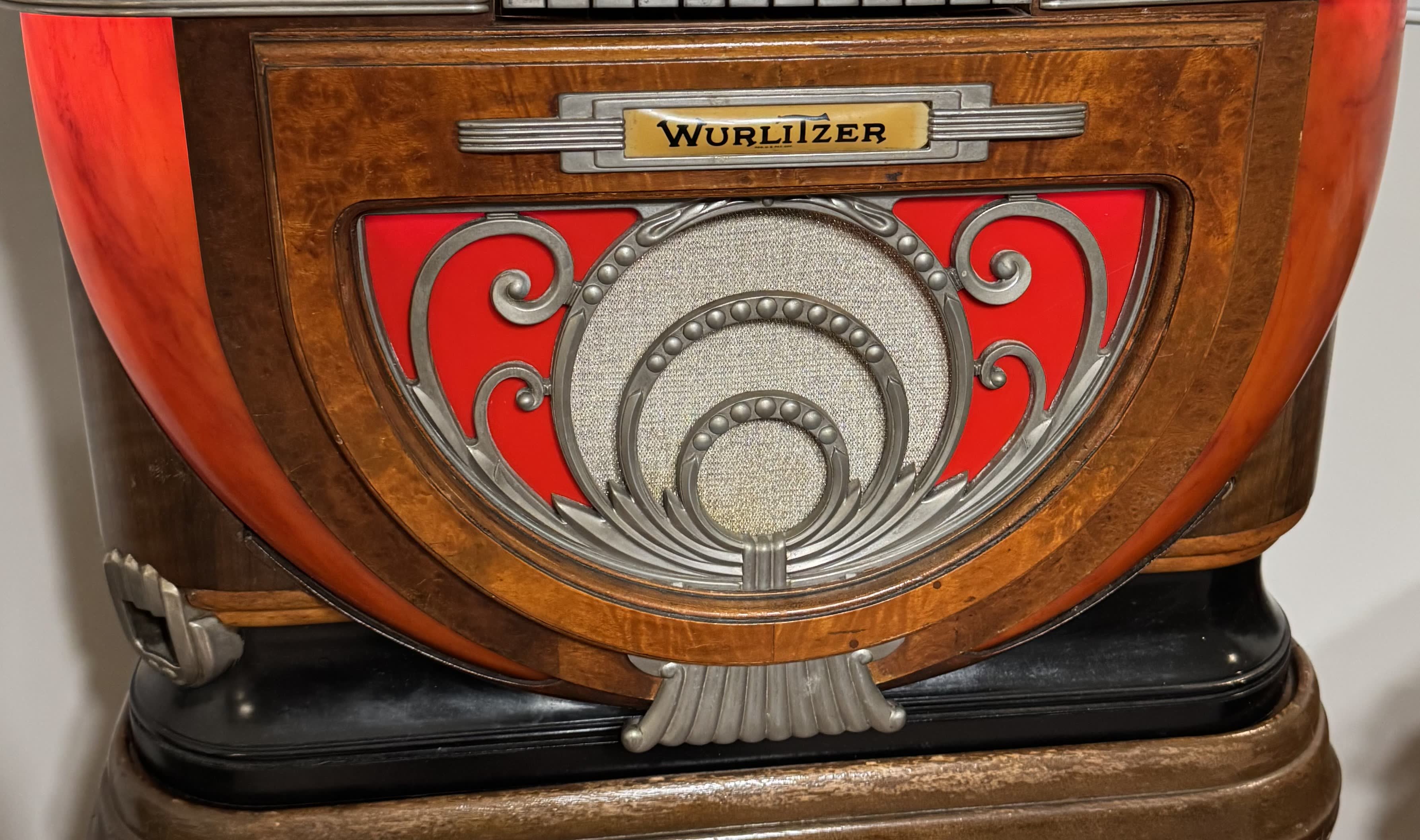
At some point in the machine’s long life, the front grill had been slightly bent. The two highest ‘curls’ on the grill had been pushed inwards about a quarter inch. This combined with the already aging and brittle plastic caused the grill inserts to bend and break.
From the back, they did not look quite as bad and were closer to their original color.
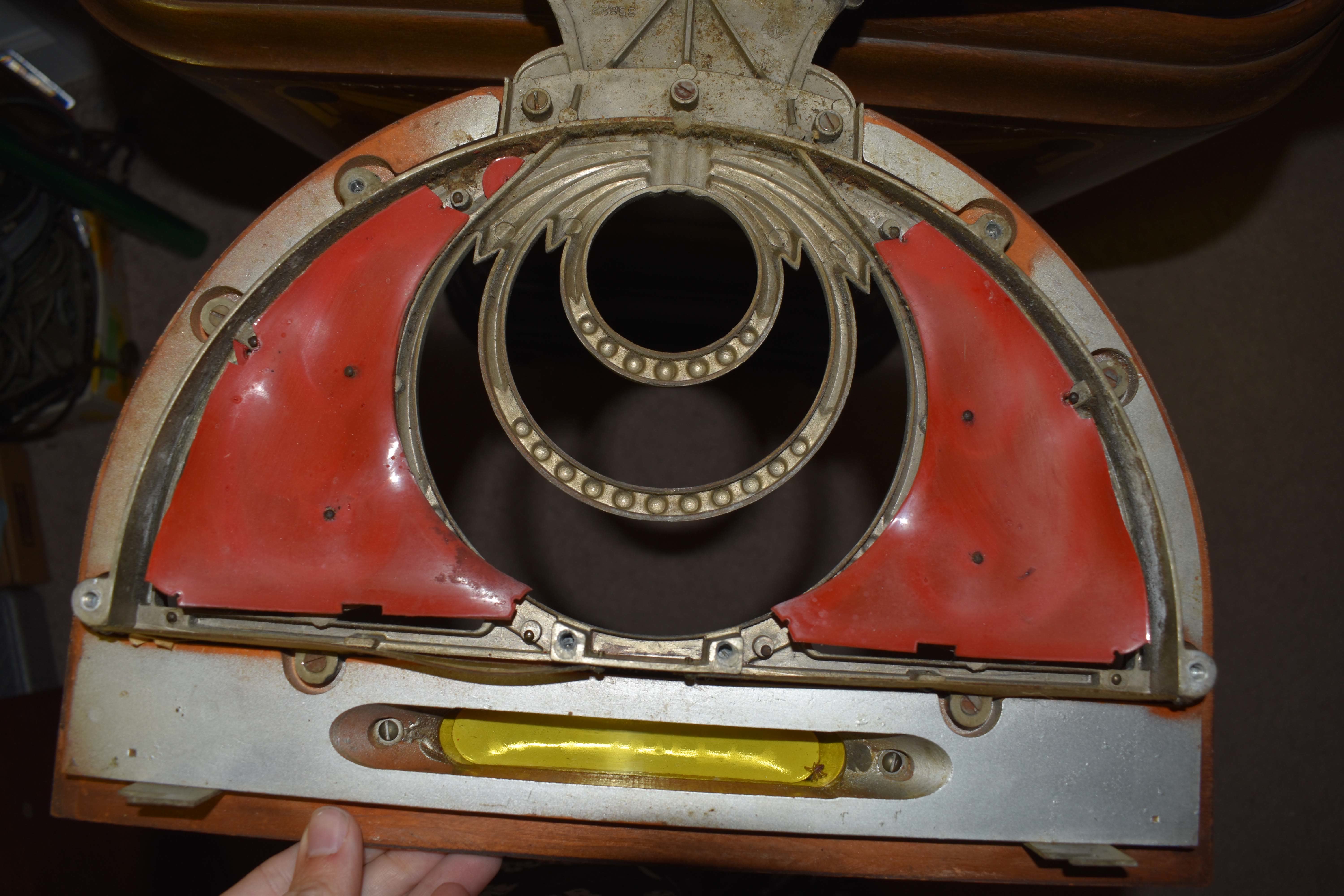
However, they certainly could not be moved back into place. Any movement at all caused them to further break. Also, over the years the pieces appeared to have shrunk some. So, I fully removed the old inserts. They can be accessed by removing the front speaker via four nuts and then removing eight screws in the housing below that. Next, I slowly and very delicately massaged the grill curls closer to their original position. I installed some reproduction inserts until I can find some originals in good shape to go in the machine. The reproduction pieces fit just fine. They are noticeably brighter than the old ones but I actually like it. That combined with the backlight behind them looks great.
Mechanism
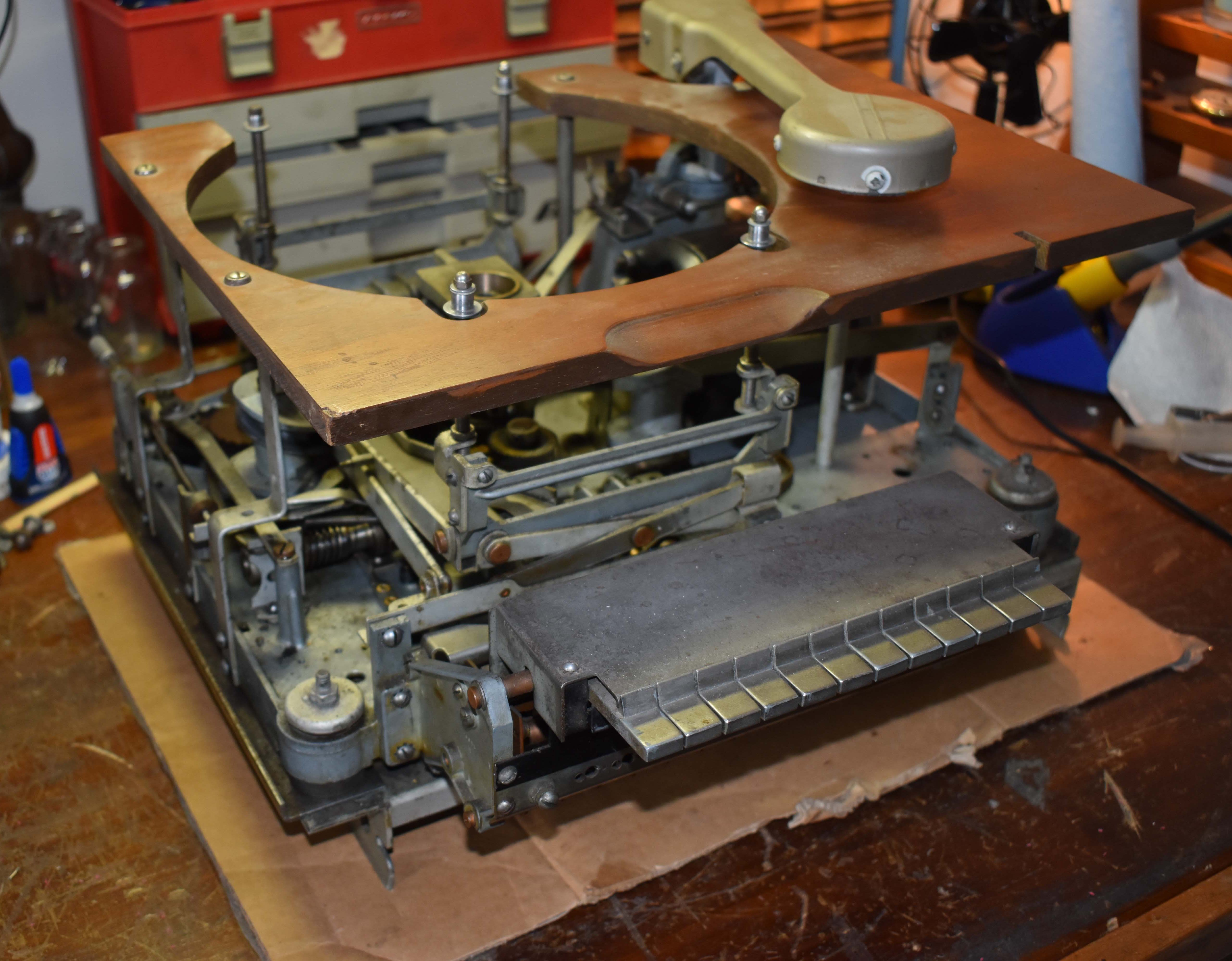
The mechanism did need to come out of the machine for testing, adjustment, and lubrication. First, the top lid needs to be removed from the box. This is needed so that the record table and trays could come out. The table was in a lifted state that wouldn’t allow the mechanism to slide out. The record table and all records can be lifted right out of the machine. Then, the needle, amplifier, and coin mechanism cords were unplugged. Finally a single bolt on the right frame rail is all that is holding the mechanism in place. The whole mechanism can be slid out the rear and placed on the table.
And here’s the back.
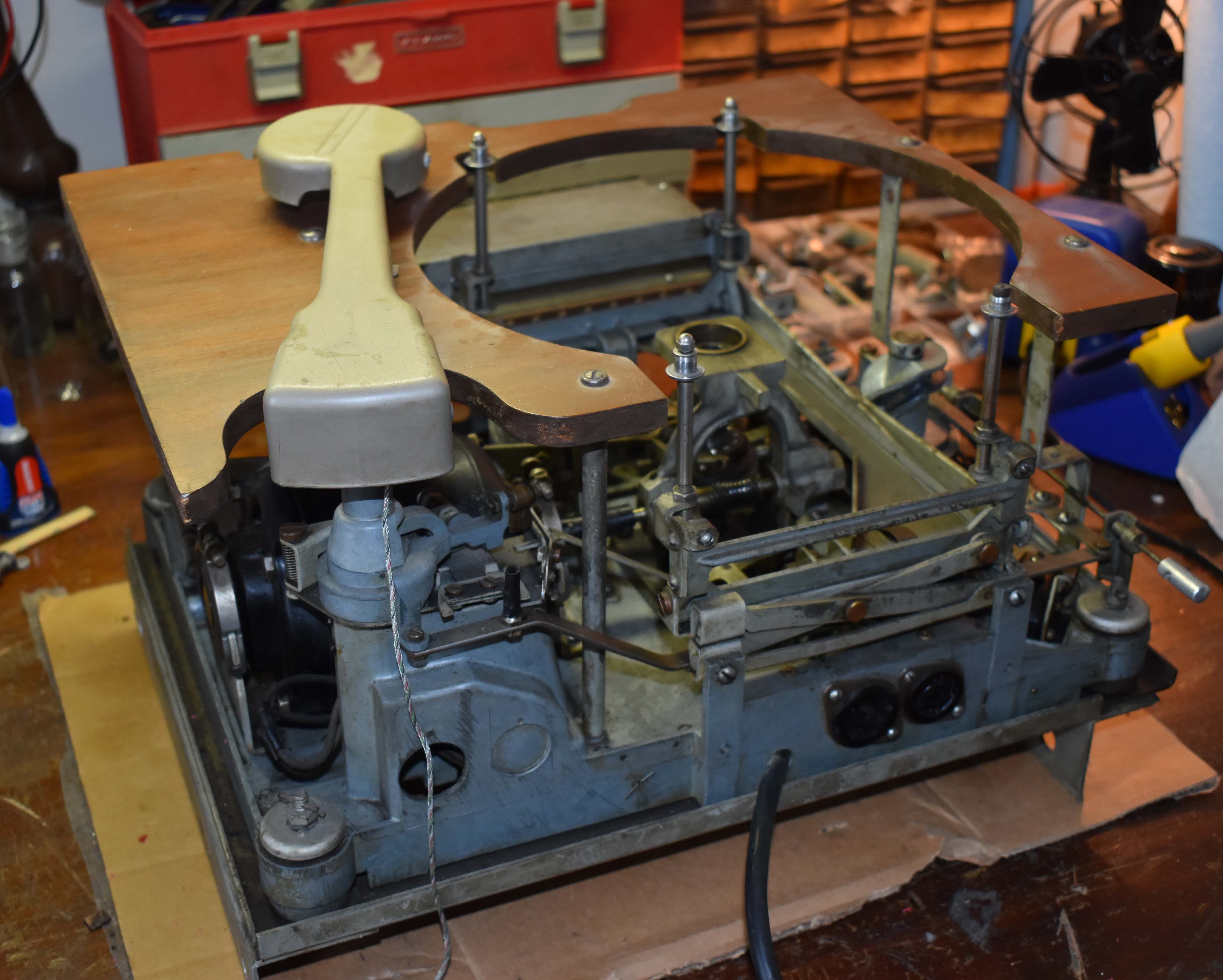
The first issue was that the mechanism wouldn’t start a cycle. The coin mechanism appeared fine, so the issue had to be here. To be sure, I wired a switch connected to the two smaller pins on the connection for the coin mechanism. This let me simulate a successful coin deposit. The credit did cause the top gear on the magazine switch assembly to move, but nothing else tripped and the motor did not start.
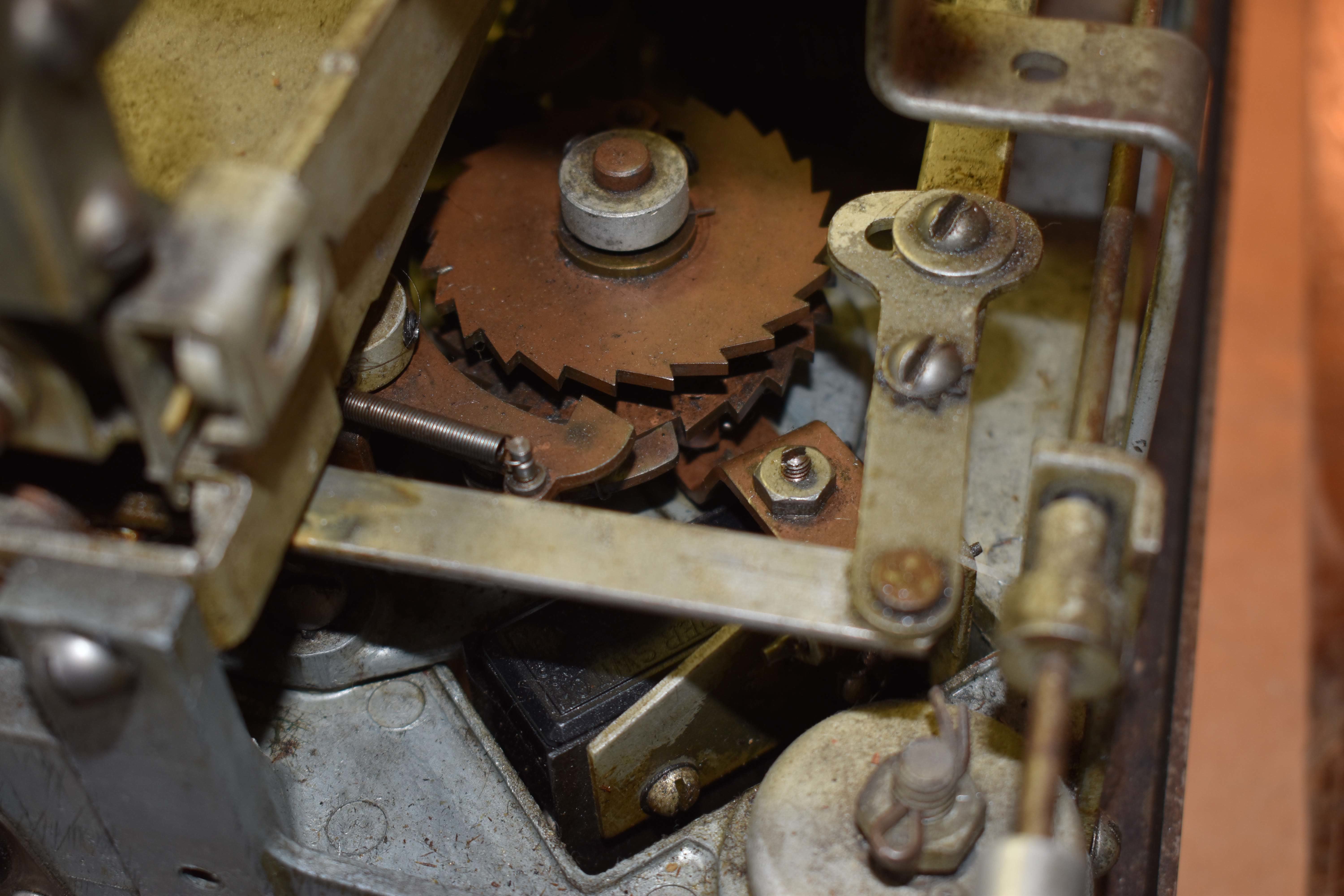
The top ratcheting gear acts as a counter for the total number of plays or cycles to perform. For each credit, it is moved forward one position. The gear underneath this acts as the counter for the number of plays or cycle the machine has done. A detent and a cam allows the bottom gear to slide upwards at a certain point aligned with the top gear. This lets it ‘track’ the top gear and perform the correct number of cycles. If two credits are received, the top gear moves two places forwards. This causes the bottom gear to slide, which causes the motor switch to activate. For each cycle of the machine, the bottom gear is moved forward one place. After two cycles, the detent causes gear to move up, the switch to release, and then the motor stops.
In this case, multiple credits would move the top gear multiple places but the motor switch didn’t trigger. This could be due to wear and tear or corrosion on the switch contacts. There was an easy solution. Directly over the switch is a set screw and a nut to adjust the position of the motor switch. With the nut loosened and a credit entered, the set screw can be tightened to push the the switch contacts farther. When the motor activates, re-tighten the nut. Now it hasn’t been an issue.
After some lubrication to loosen everything up, the next issue is that appeared is that after playing a record, the next phase wouldn’t start. The tone arm wouldn’t move back, it just stayed at the end of the record. The adjustment for it is just on the back of the mechanism below the tone arm.
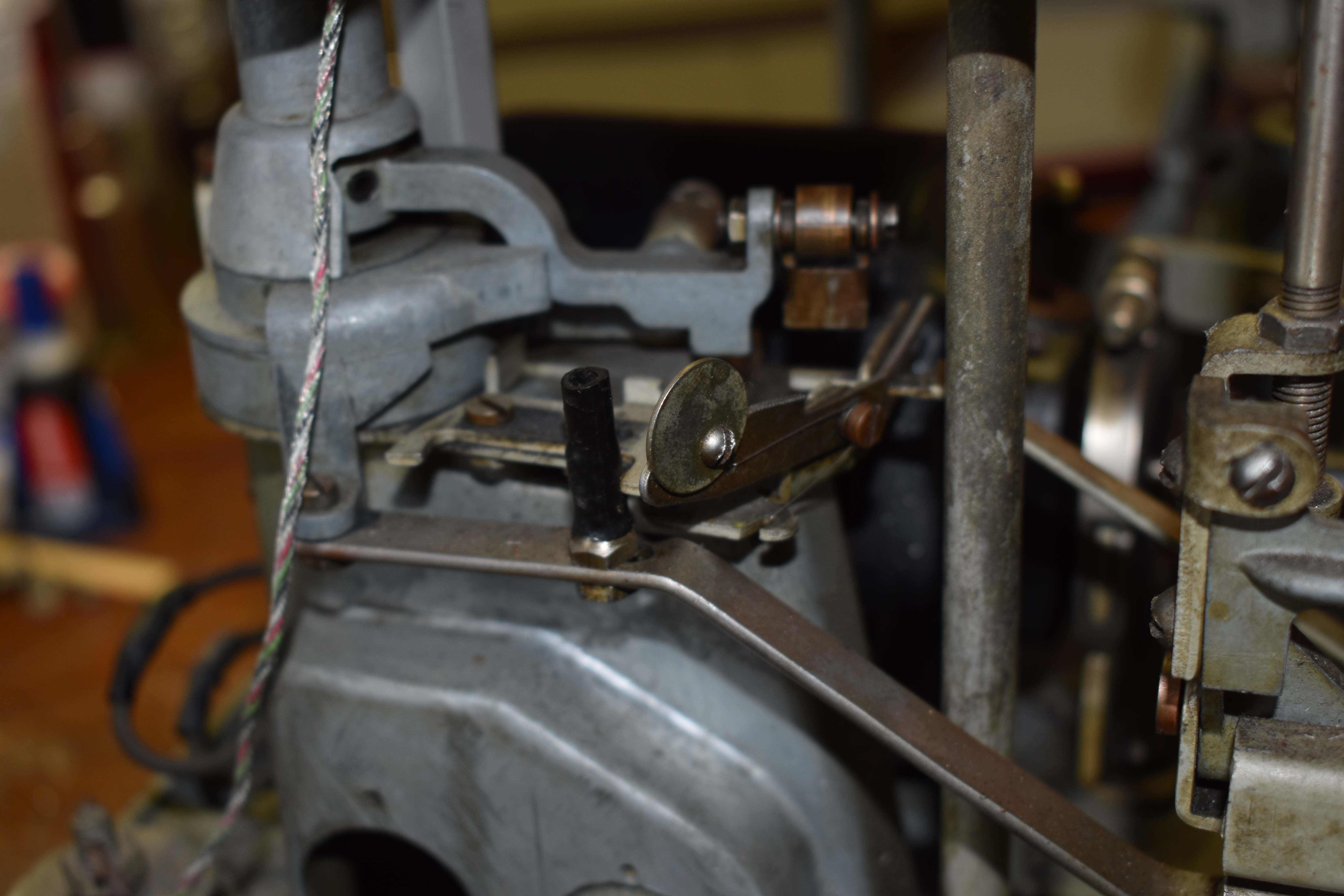
There is a small circle attached with a nut and bolt. This is attached to the trip mechanism that begins moving the tone arm back and goes to the next phase of the cycle. It is tripped the tone arm moving far enough against the circle which causes the bar to pivot downwards and release a latch further under the machine. To adjust it, the nut and bolt were loosened and the circle piece was moved clockwise to push the bar down sooner.
Not only were the records not ending, they were also starting too late on the record. A song would start playing roughly fifteen seconds into the song. The adjustment for this is on the inside beneath the tonearm and above the motor.
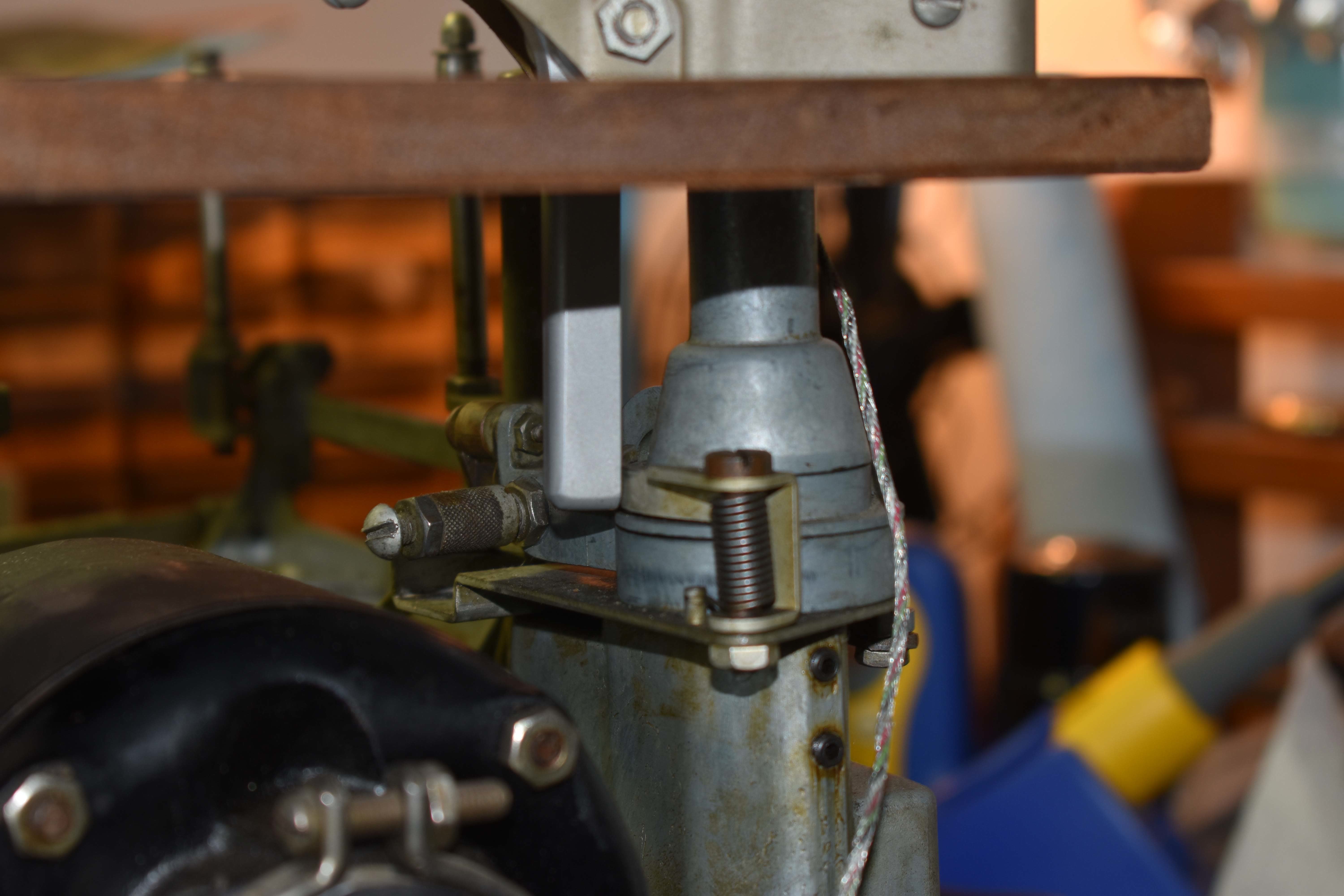
Adjusting this screw adjusts where the tone arm is stopped to drop down on the record. Tightening it makes it drop further on the record and loosening the screw makes it drop earlier on the record. Now with this fixed, it plays records just fine!
Coin Mechanism
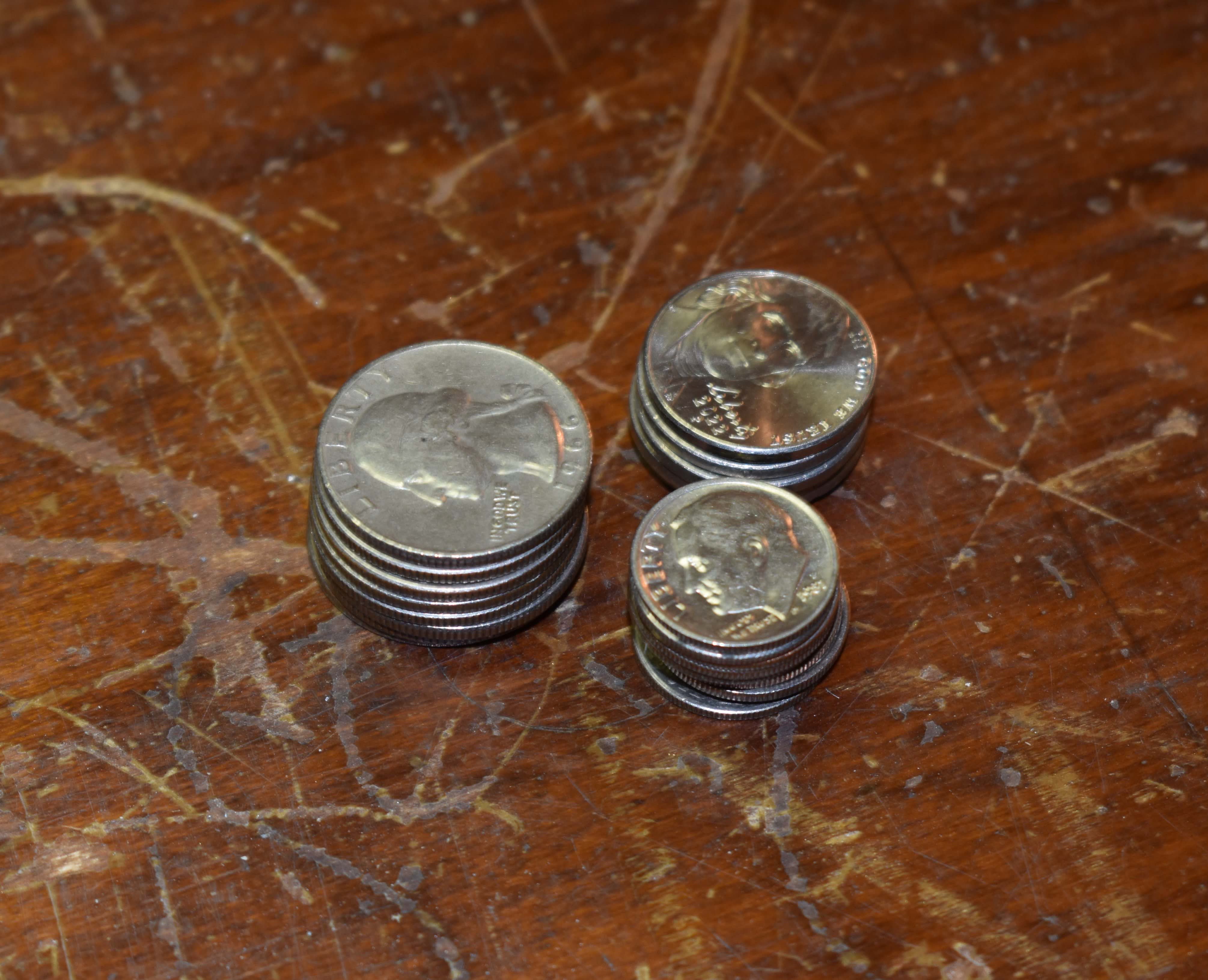
Due to years and years of kids (definitely not me) forcing coins into the non-functional machine, there was quite a lot of change jammed into the coin mechanism. So it came all the way out.
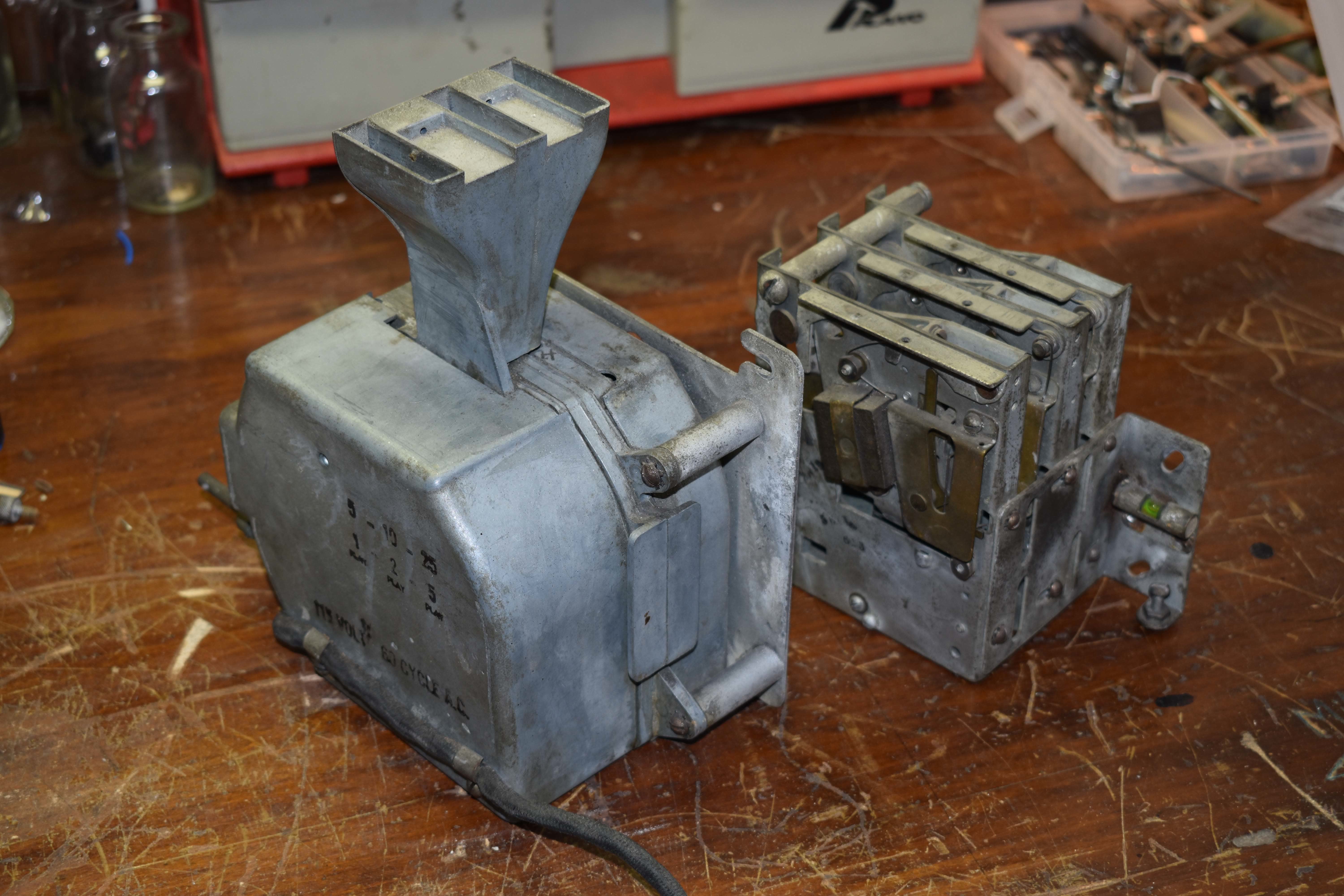
The coins were removed from the grinder and slug rejector as well as the upper track. Everything else with the coin mech appeared to be mechanically fine. Here is the total amount of jammed coins I pulled out of the machine.
Back Door Foil
Sadly, the decorative green foil on the back door had been deteriorating and was very torn and needed to be replaced.
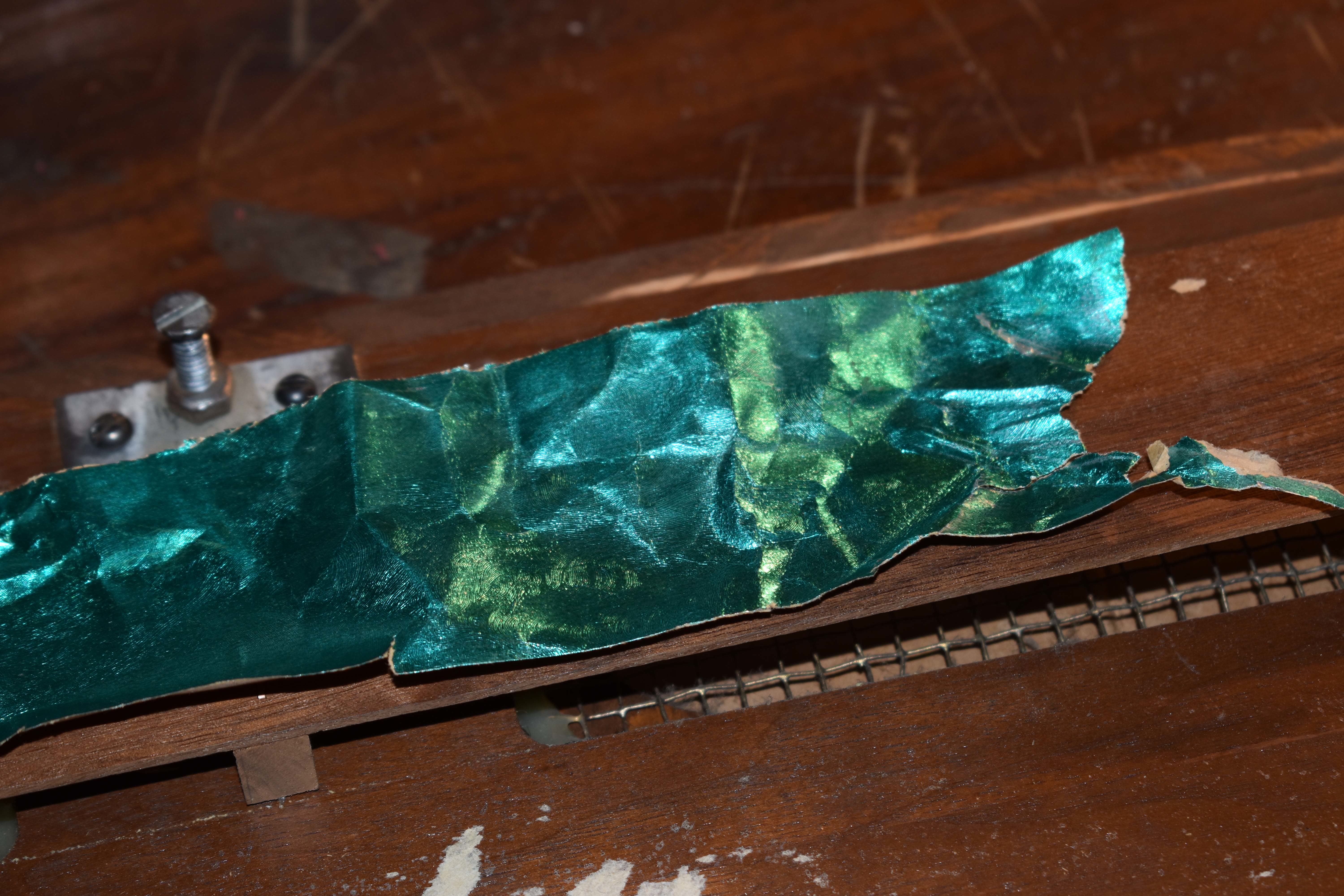
I couldn’t find an exact match for the foil I had but was able to source some that is close enough. It is still foil, has the swirly embossed design, and was a much nicer green in my opinion. So it went on the door with non-acidic glue.
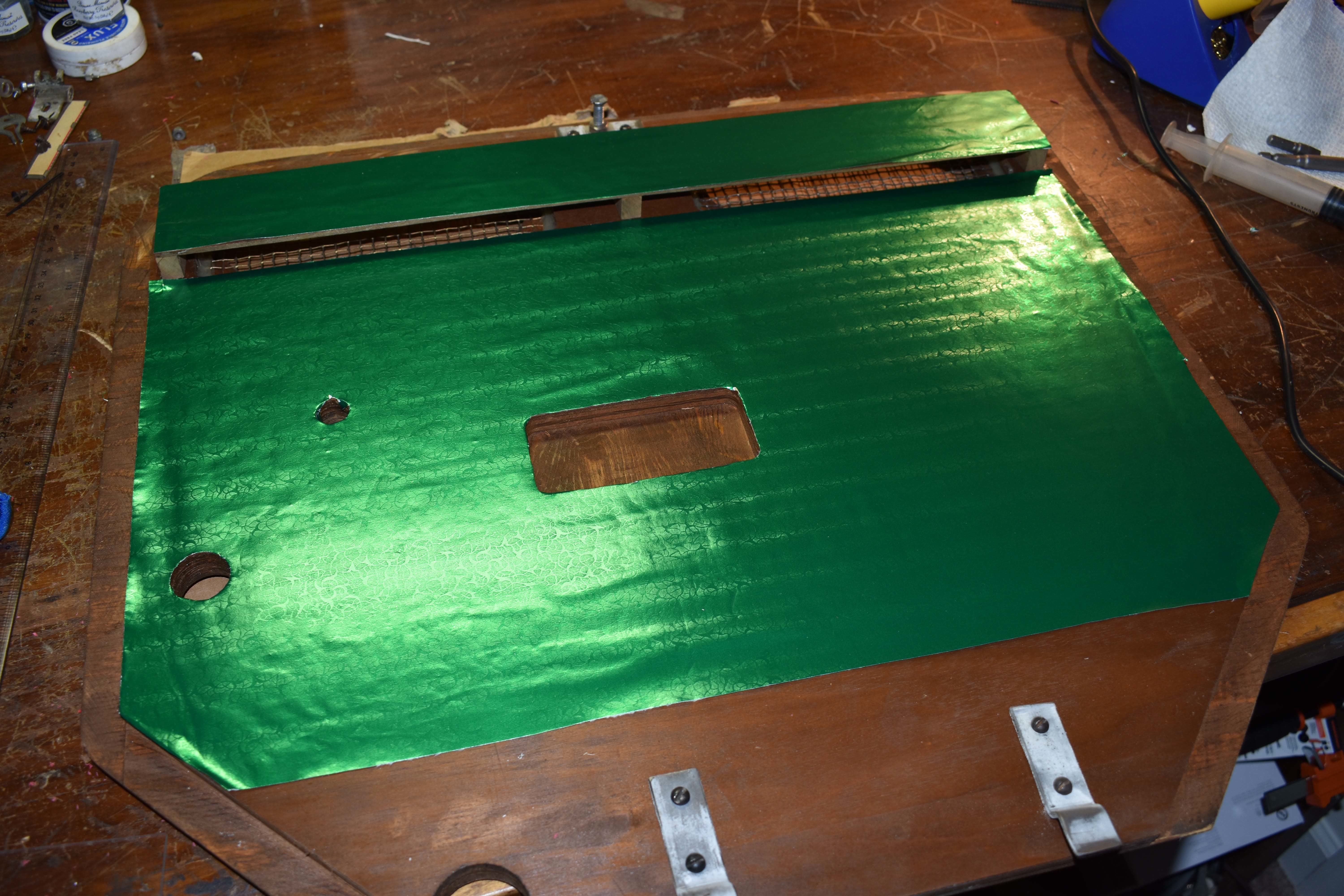
It looked lovely, so I flattened it out and placed some heavy books on it to hold it down while the glue set.
Reassembly Order
After pulling everything out for repair, inspection and lubrication, it all needs to go back in. First, the coin grinder goes back in on the bottom left. It rests on pins from a plate behind it with one thumb screw to hold it in place. Then the slug rejector goes above that. Again, with pins to hold it, a single thumb screw, and a bolt to adjust to ensure it is level.
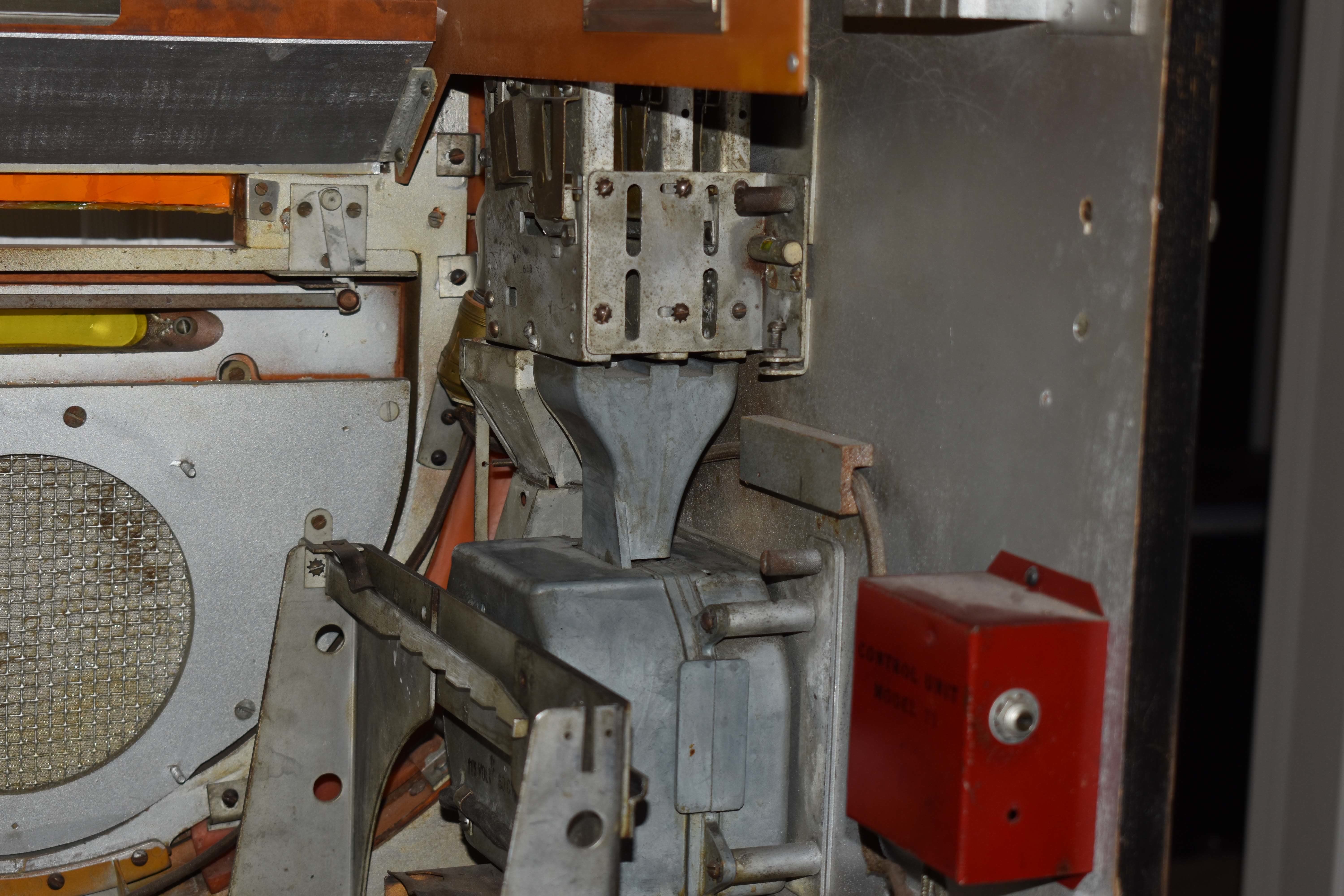
Next, the speaker goes back on the front door with four nuts to secure it.
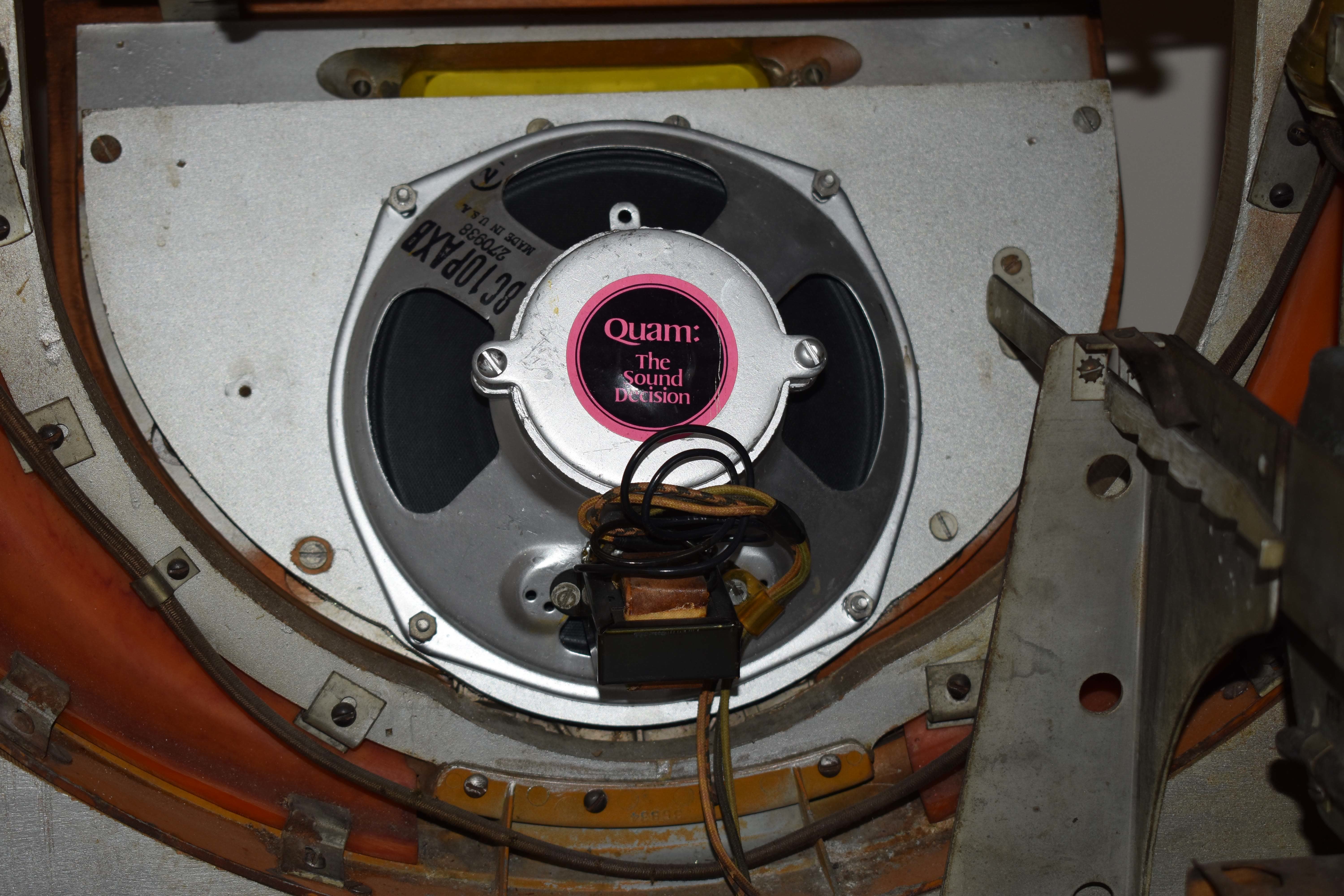
Next the amplifier can go back in to the box. There are metal tabs that fit in slots on the front and back of the amplifier. The front metal tab piece can be slid in after the amplifier is in place and is secured with a wing nut. On the front face of the amplifier is the connection to the volume control box.
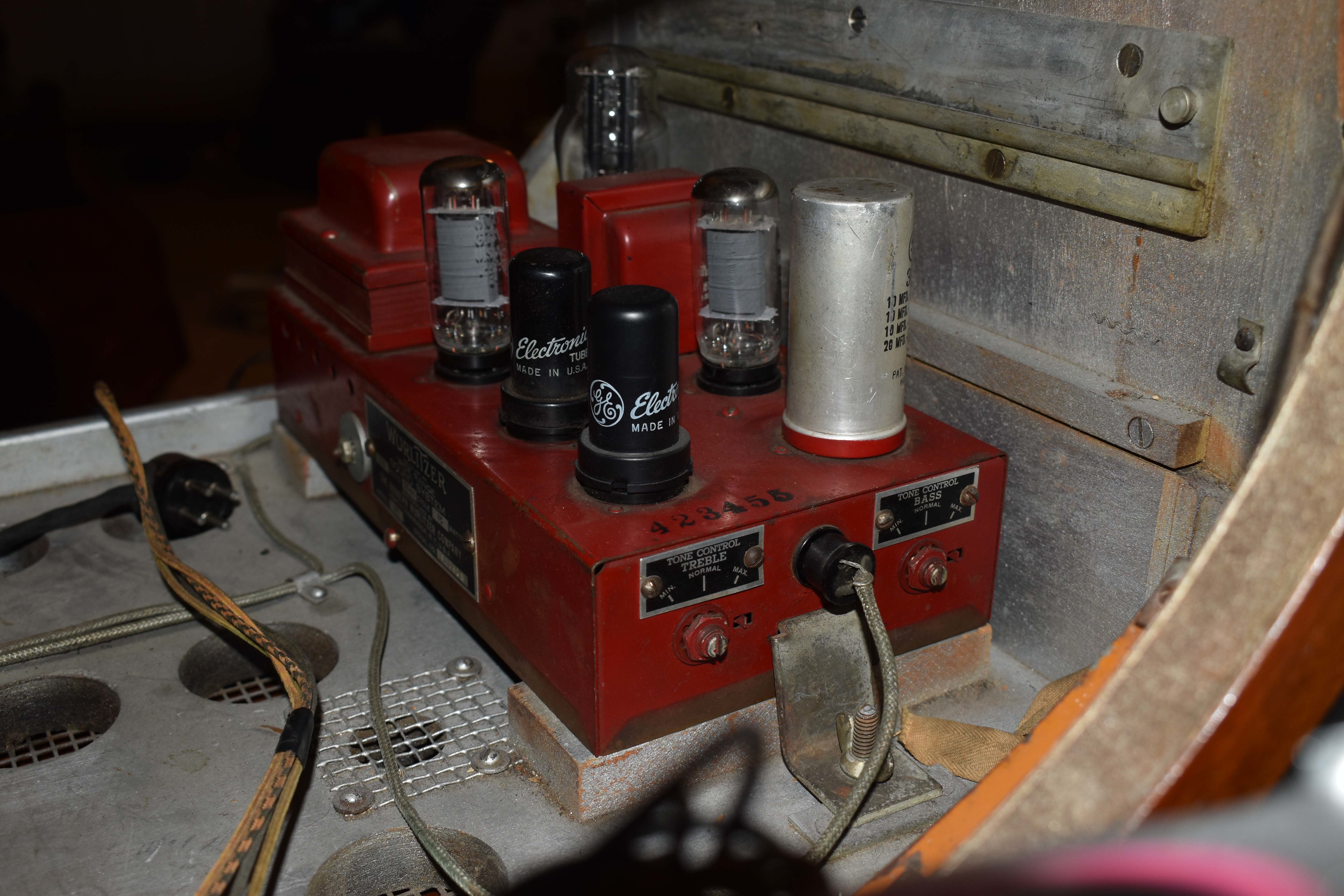
And on the upper rear is the connection for the speaker.
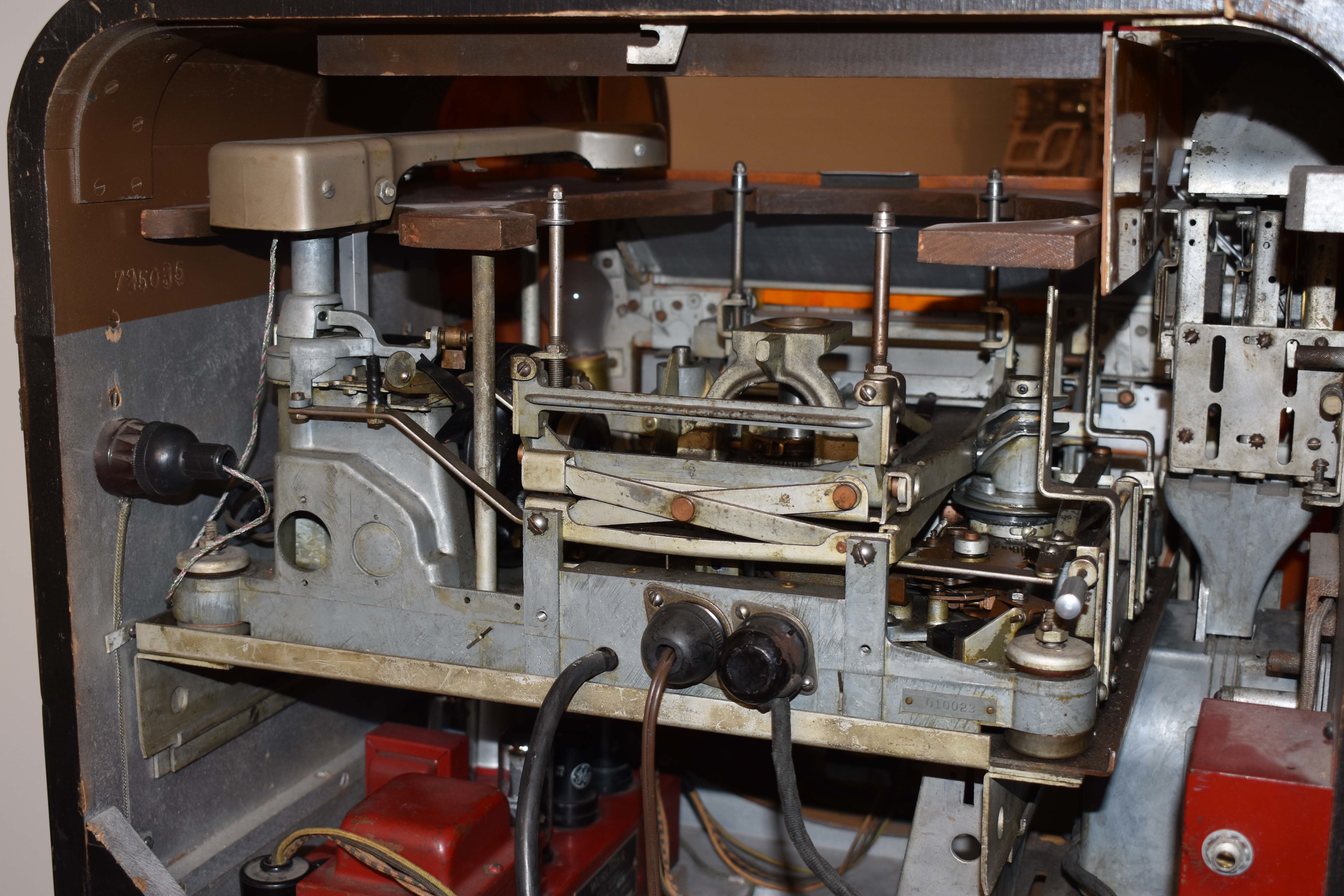
Now the main mechanism can be installed. It can easily be set on it’s supporting rails and slid into place. Then the wire from the needle can be inserted into the plug on the left wall of the box that runs to the volume control. Next, on the center rear of the mechanism is one plug and two sockets. The plug is for power and goes to the junction box. The next plug to the right goes to the amplifier for turning it on when the mechanism activates. And the last socket is for the coin grinder.
Finally the record tray, records, and title strip holder can be inserted.
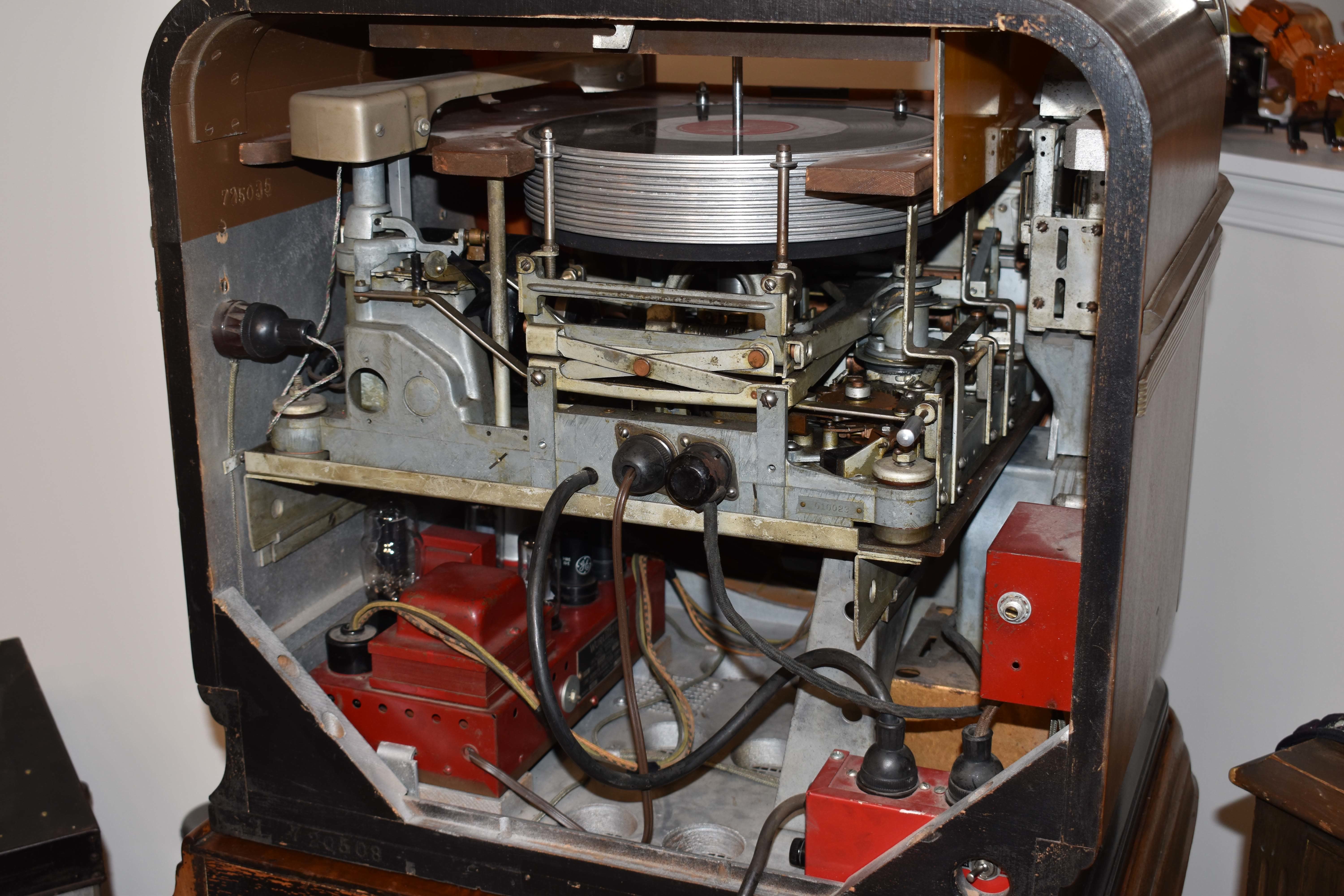
Then everything can be closed up.
More Pictures
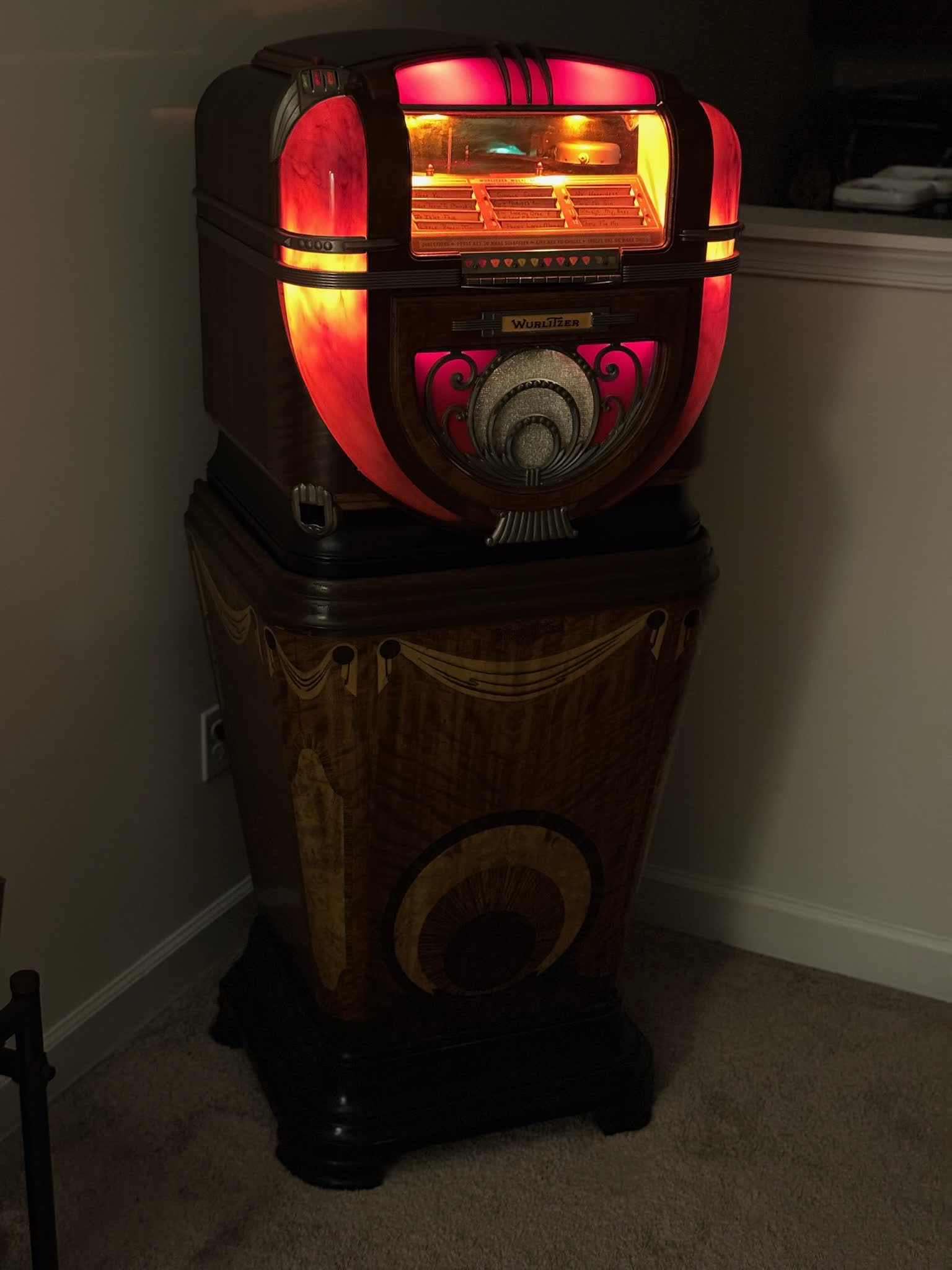
Another picture of the jukebox lit up.
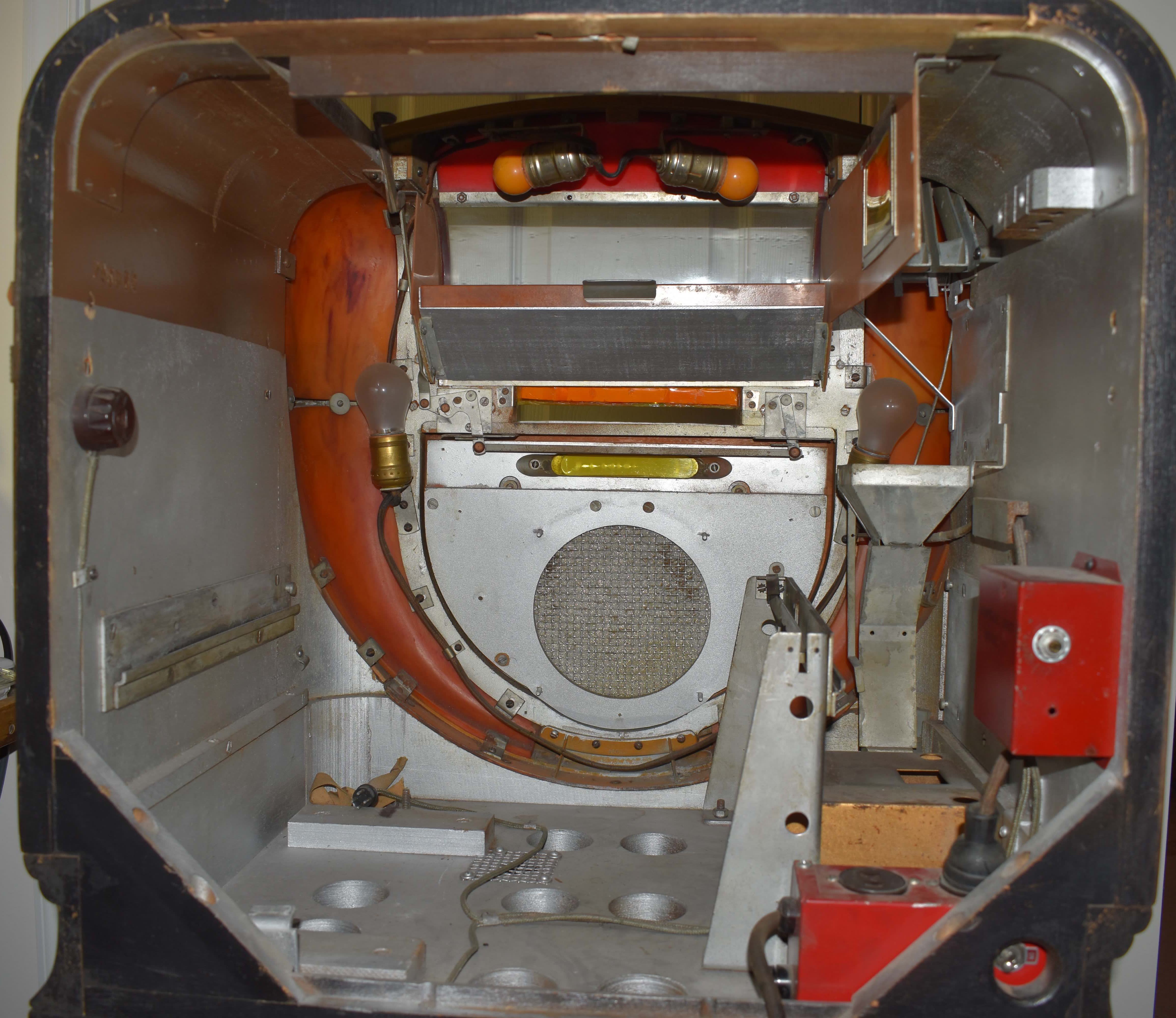
A mostly empty cabinet.
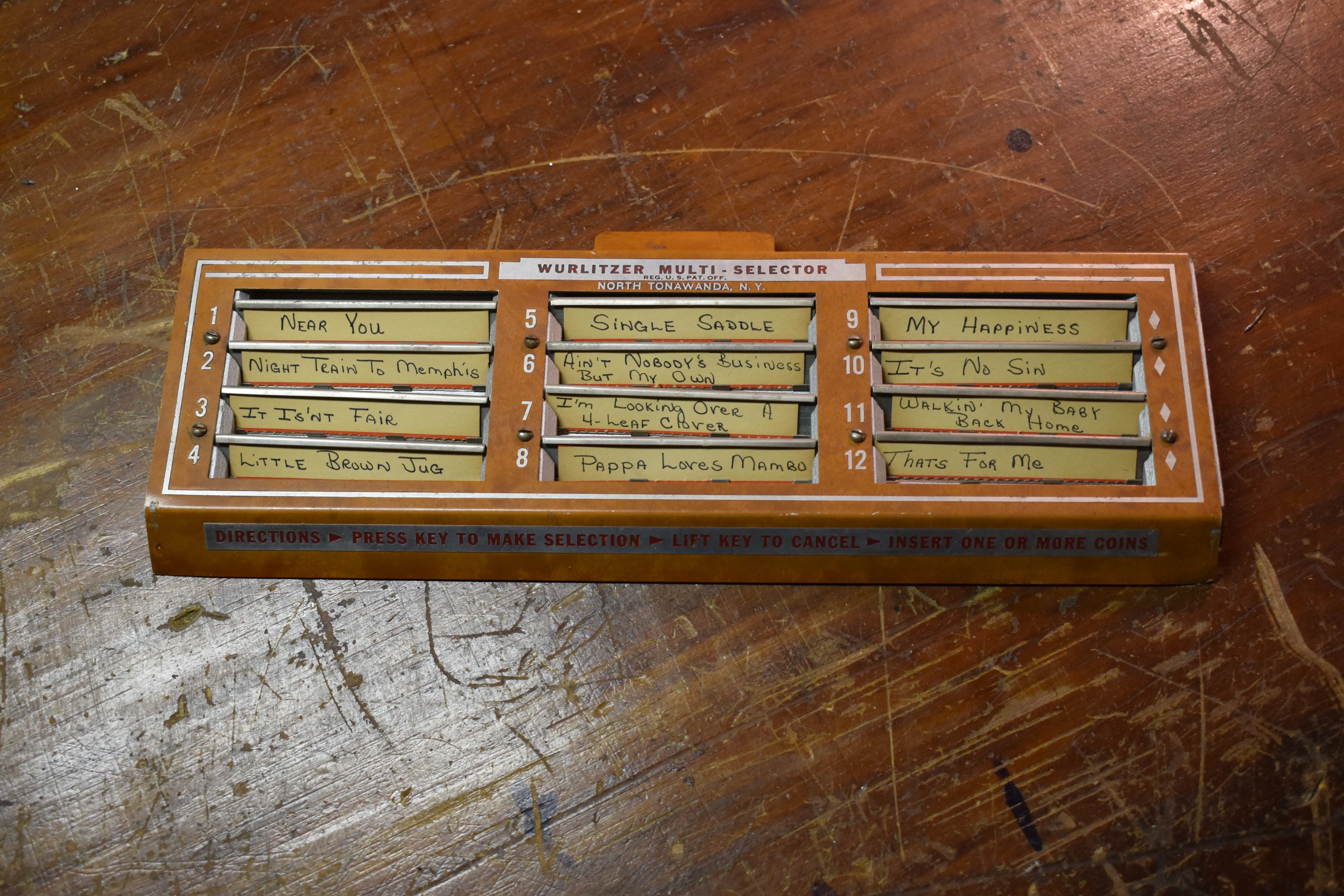
Title cardholder.
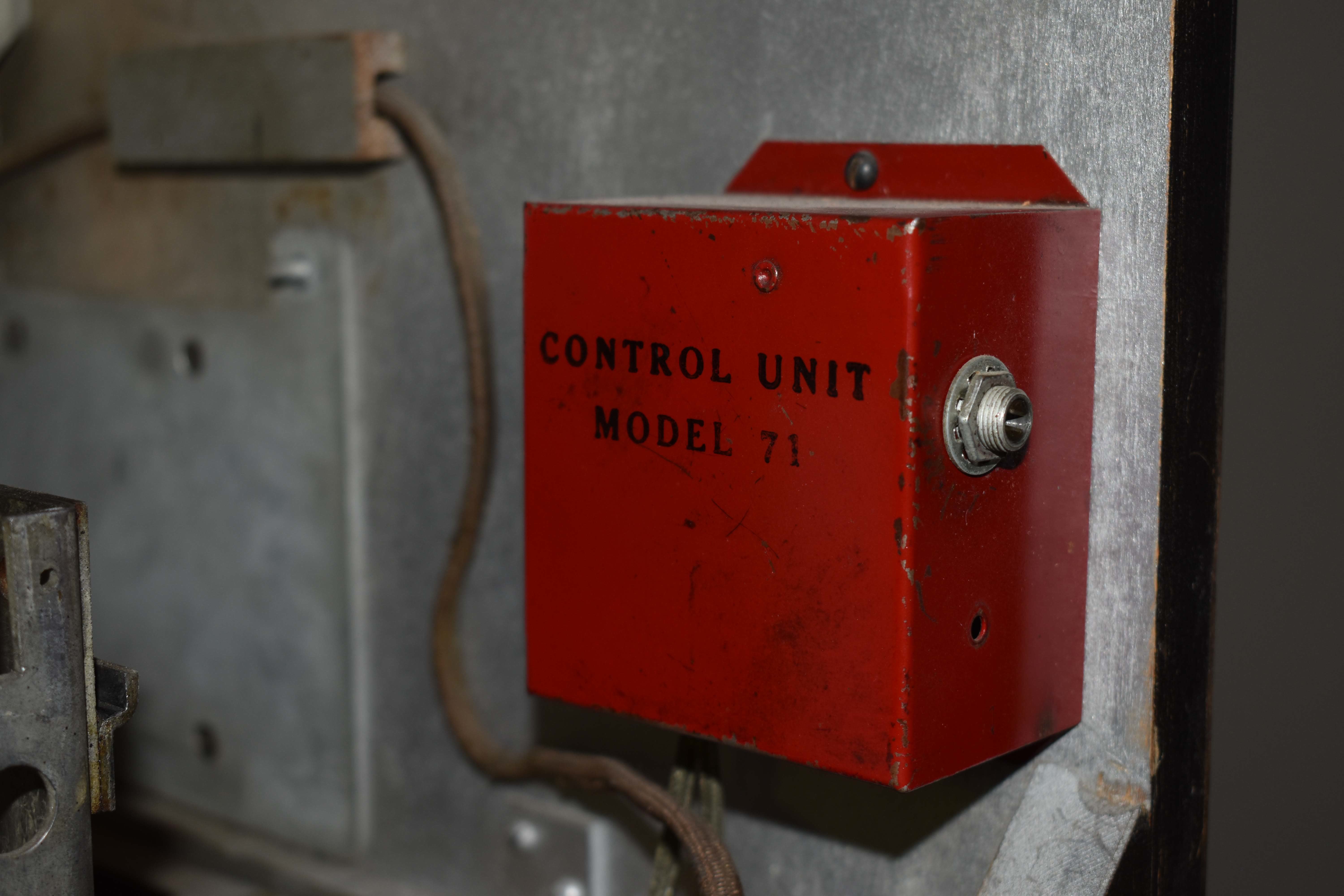
Volume control unit.
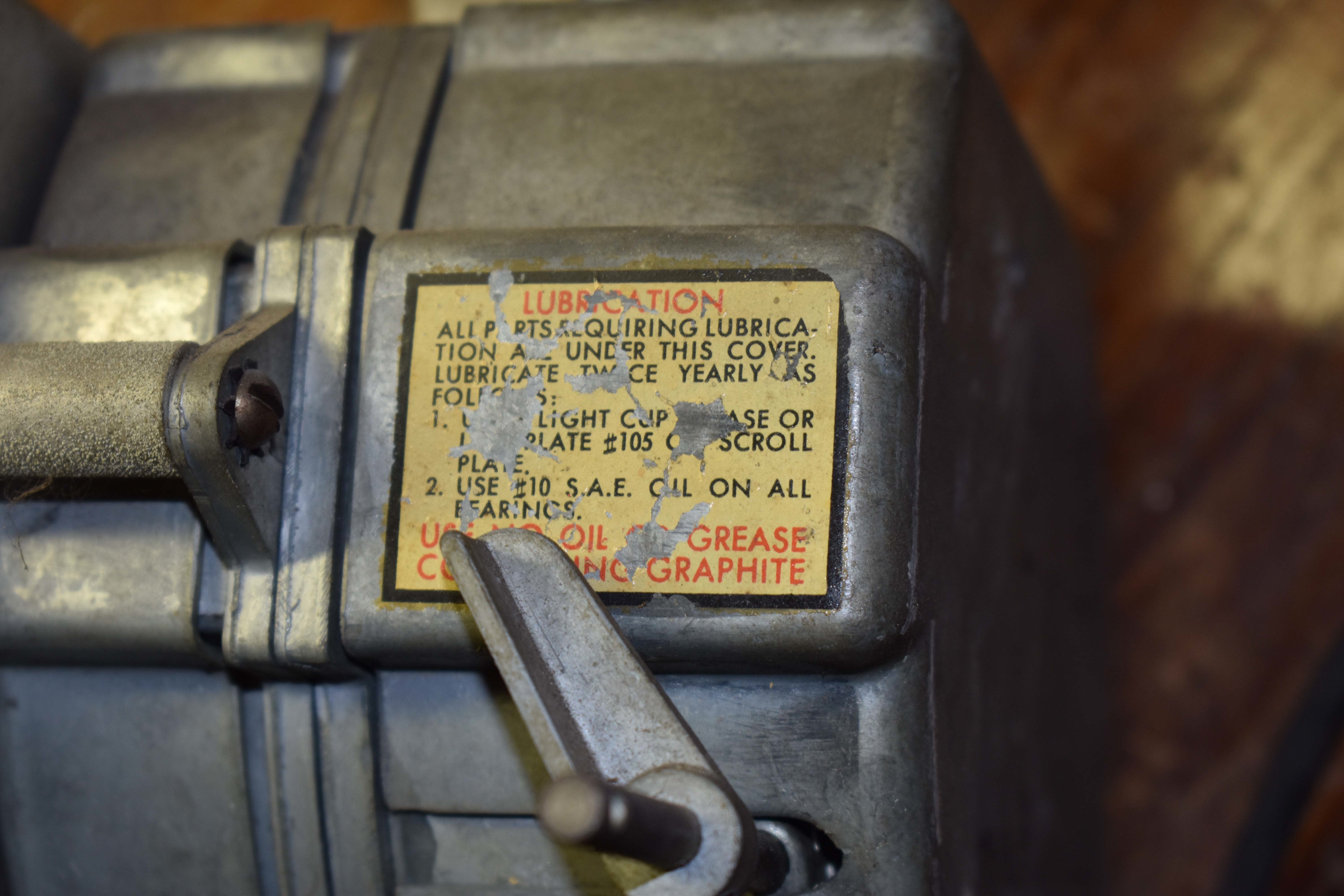
Coin grinder label.
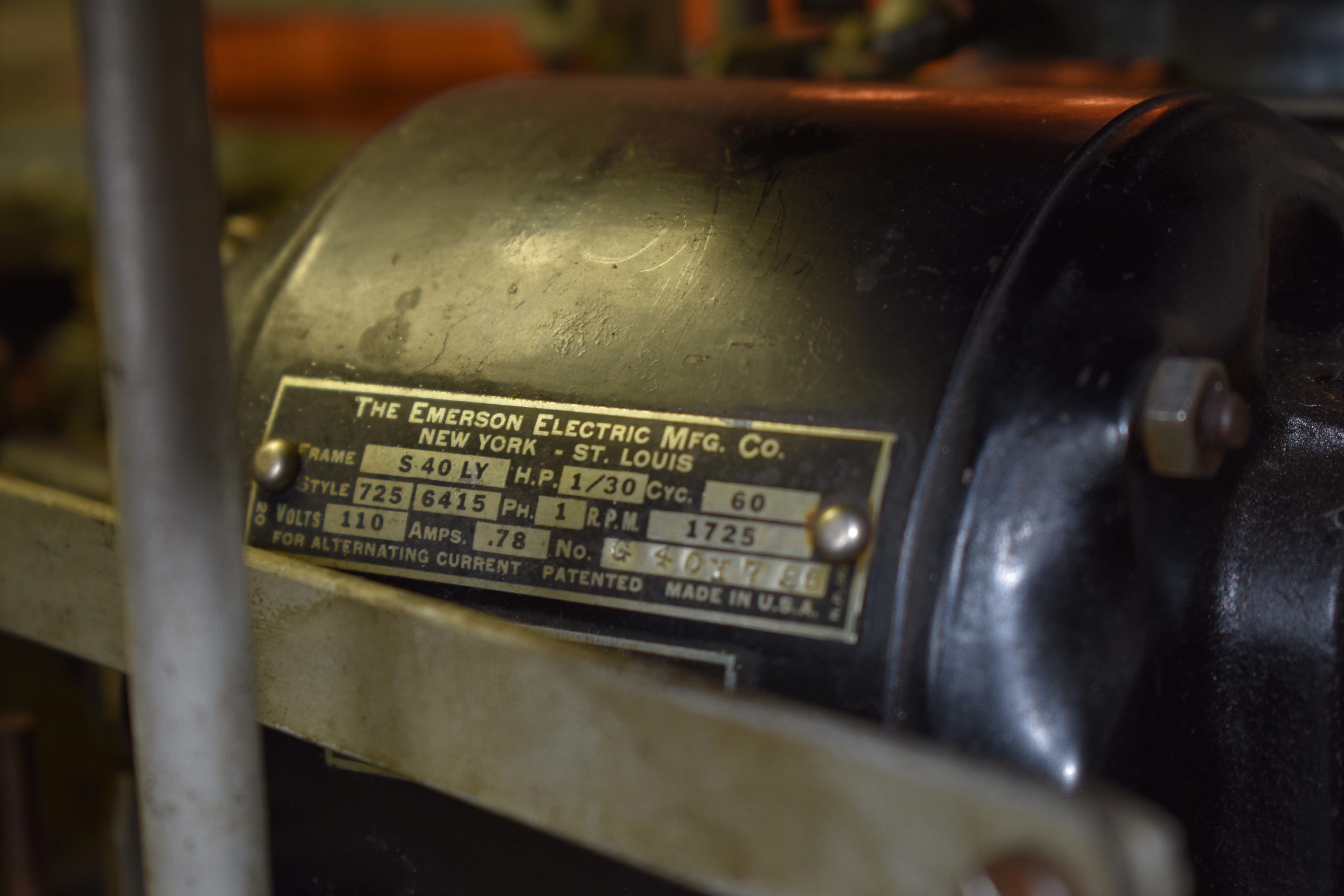
Motor label.
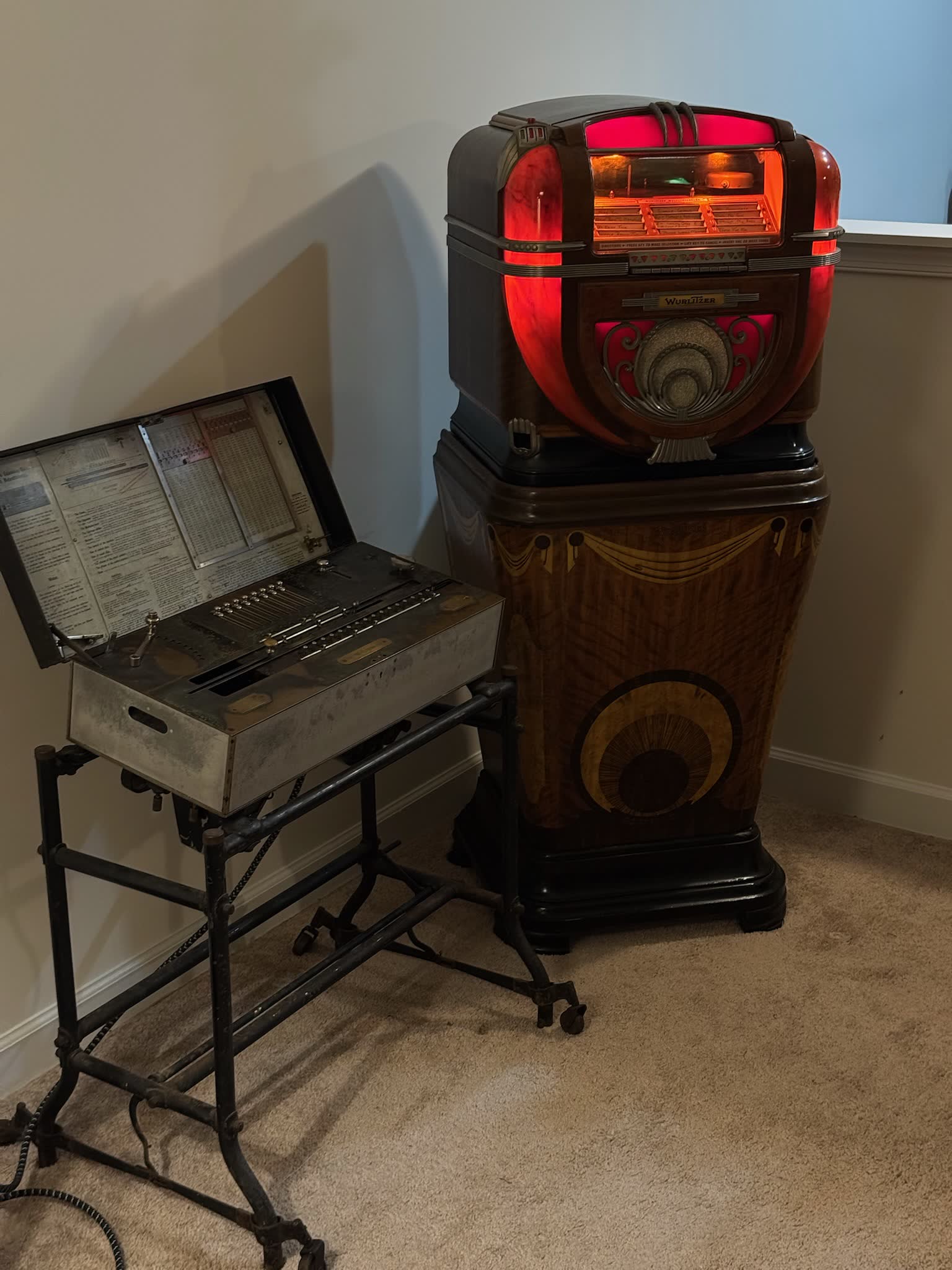
The 81 next to a mechanical calculator.
Historic Photos
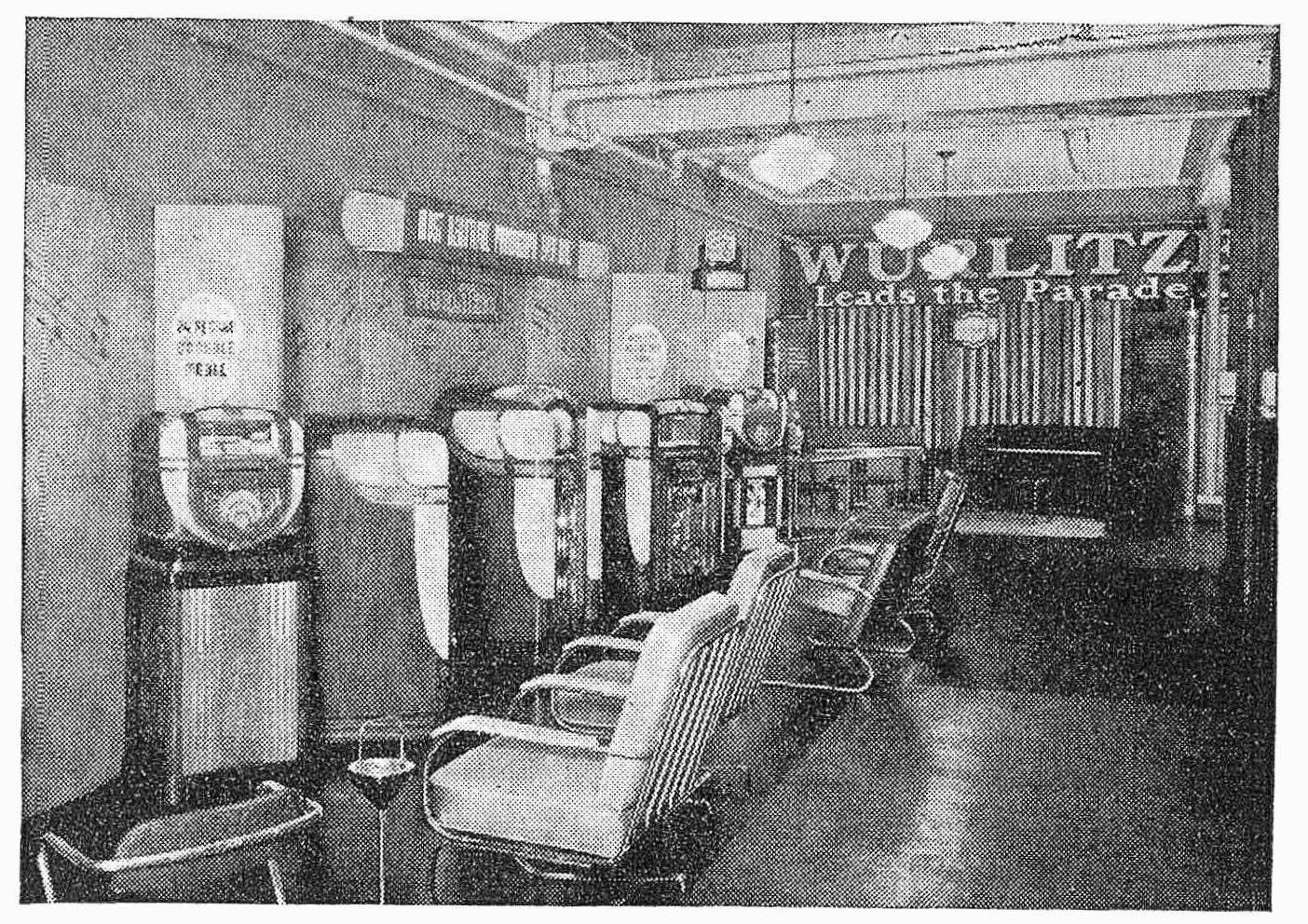
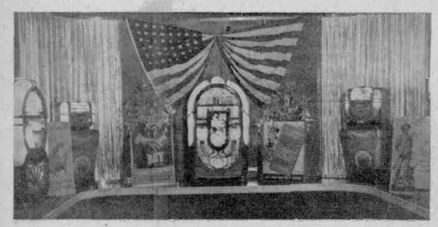
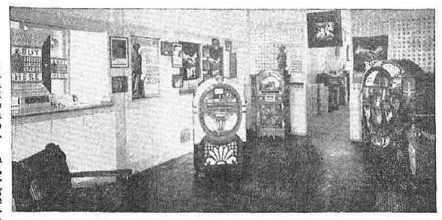
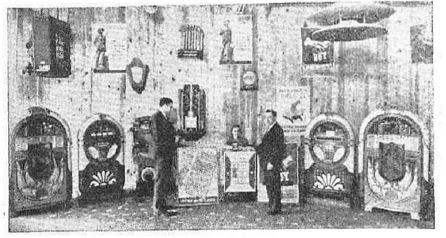
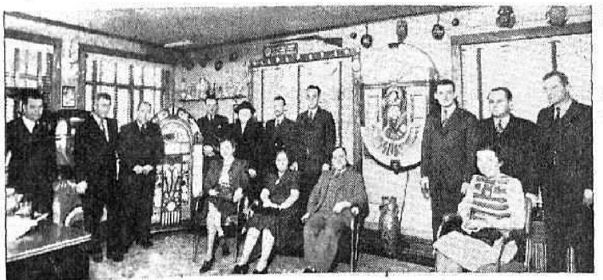
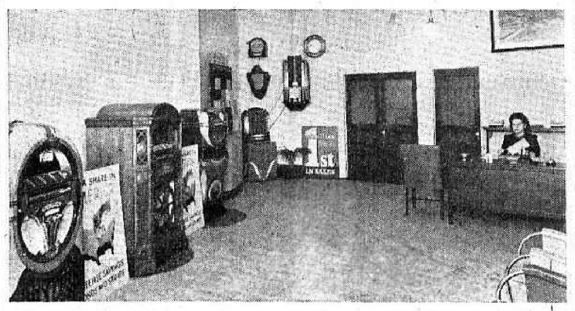
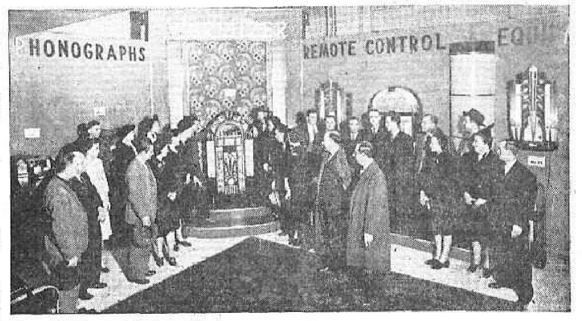
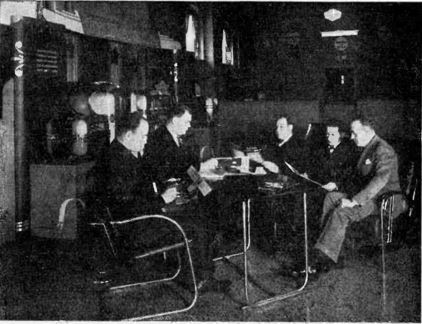
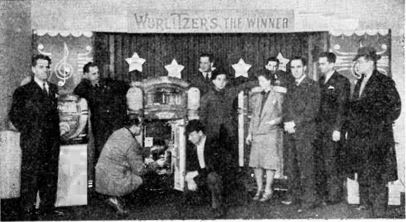
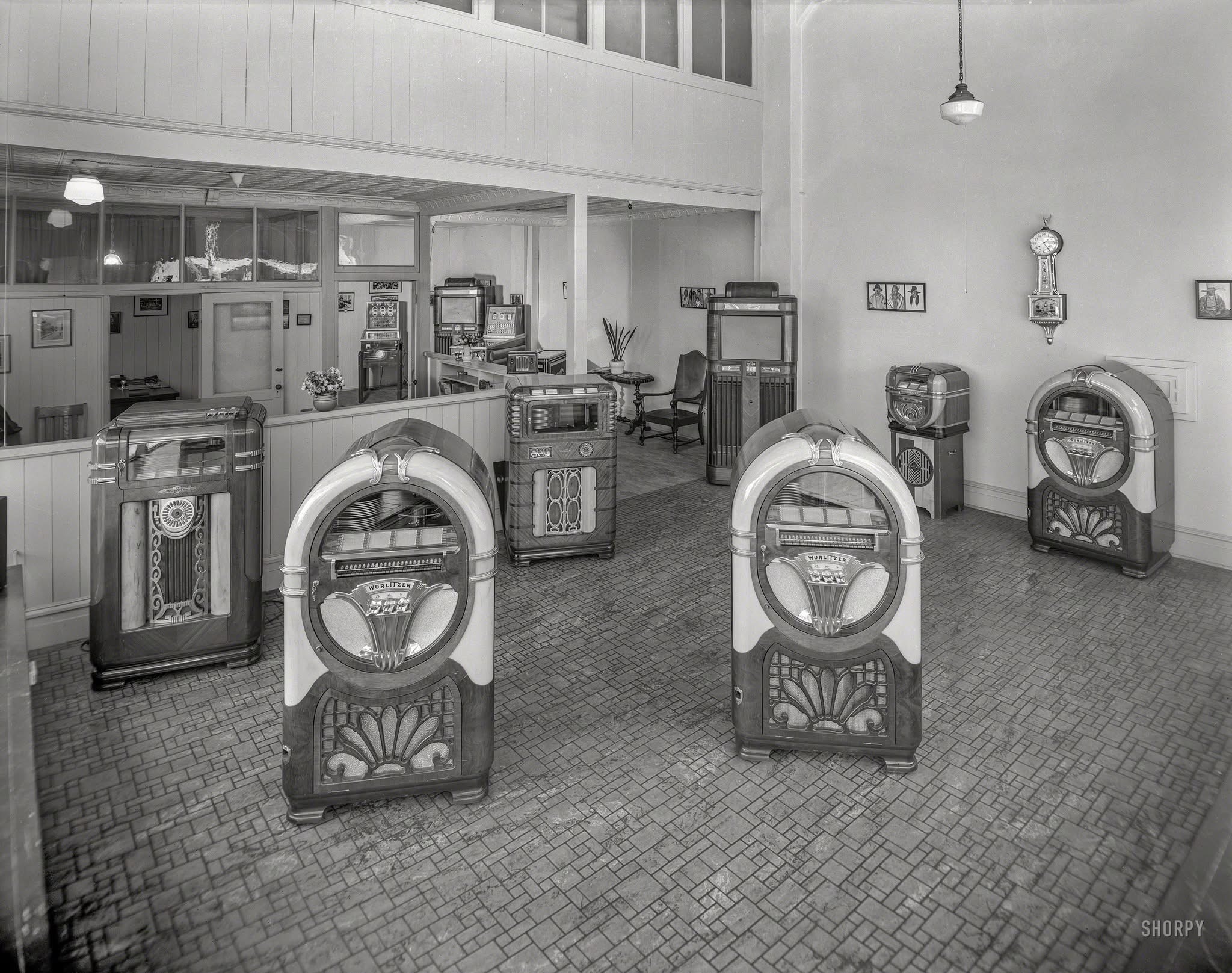
Some historic pictures of 81 and a few 71 Countertop models I have come across.
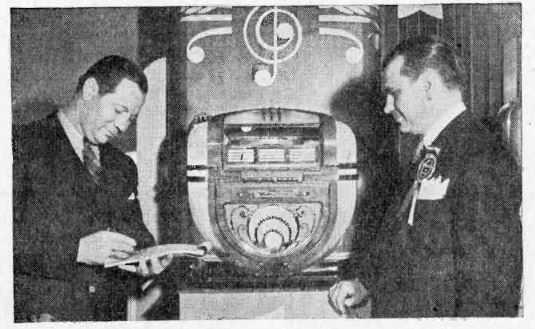
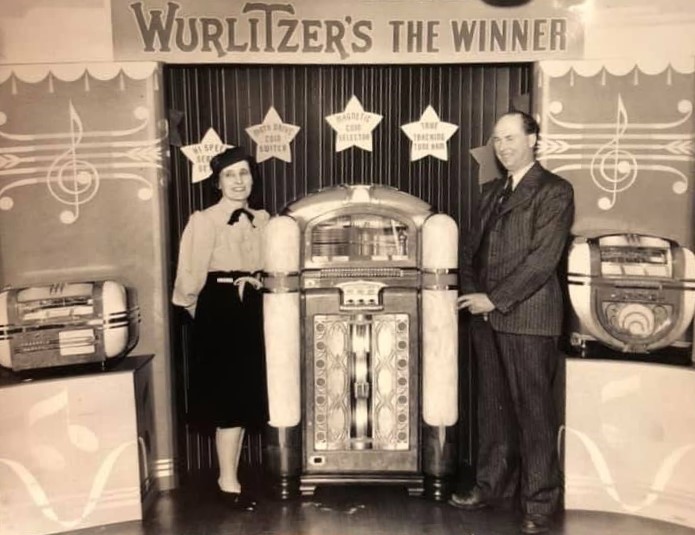
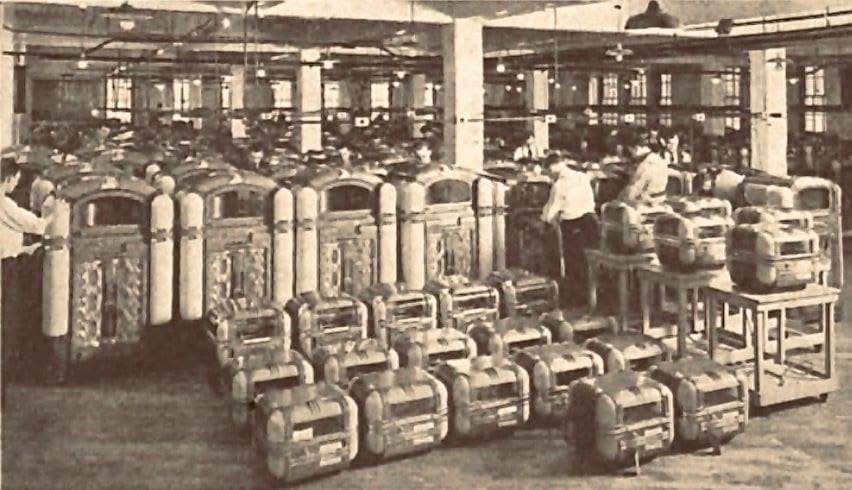
At the Wurlitzer factory.
More Advertisements
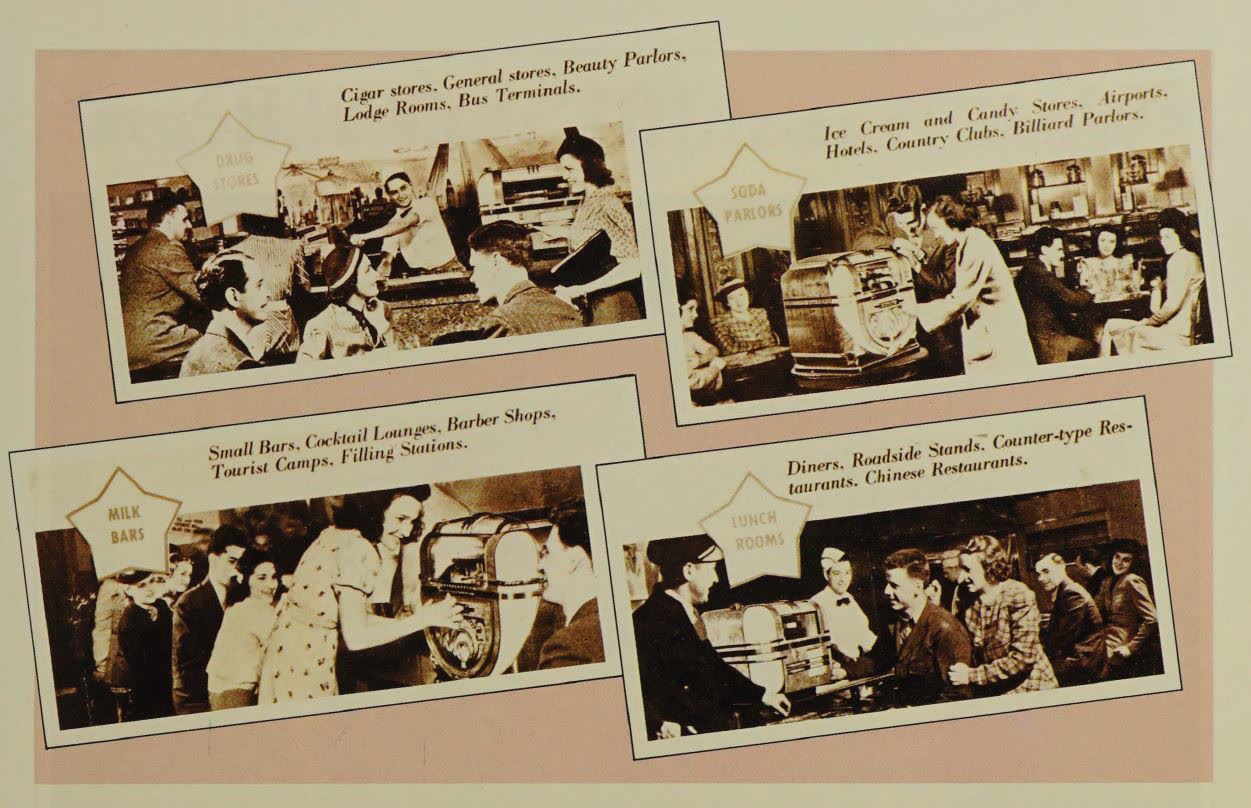
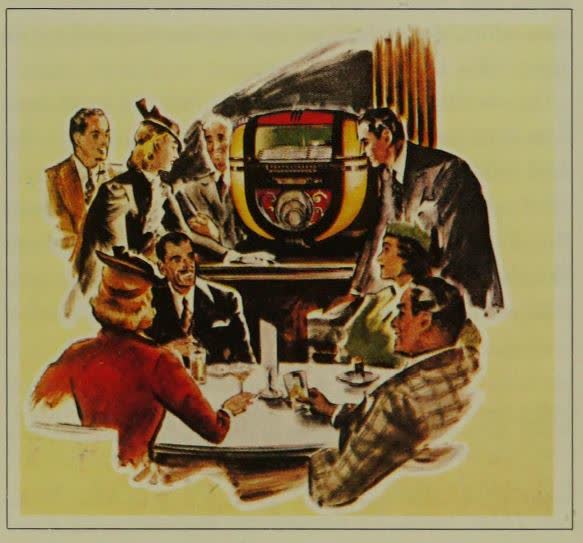
Here are a few more advertisements I’ve collected from books, service manuals, magazines, and newspapers.